.svg)


Most people start on Mailchimp because it is the name they know. It is free, it is familiar, and it gets you sending emails without much friction. That is genuinely useful when you are just figuring out what a newsletter even is.
But at some point the question changes. It stops being "how do I send emails" and starts being "how do I build something sustainable from this." That is the moment Mailchimp starts to show its limits for creators.
I have used both platforms and recommended Beehiiv to clients who were building content-first businesses. What I notice immediately with Beehiiv is how clean and modern the interface feels. Nothing is buried. Writing, scheduling, analytics, monetization, all of it is where you would expect it to be. It does not feel like software. It feels like a publishing tool built by people who actually use newsletters.
This article is for creators, writers, podcasters and solopreneurs who want to know which platform gives them the best foundation for growing and monetizing an audience. Not which one sends more types of emails. Which one is actually built for what you are trying to do.
The core difference in one sentence
Mailchimp was built for e-commerce and general marketing. Beehiiv was built by the team that scaled Morning Brew to millions of subscribers, specifically to help newsletter creators grow and earn from their audience.
That is not a subtle difference. It shapes every feature decision each platform has made. Also compare Beehiiv with Substack before making final decision.
Where Mailchimp still makes sense
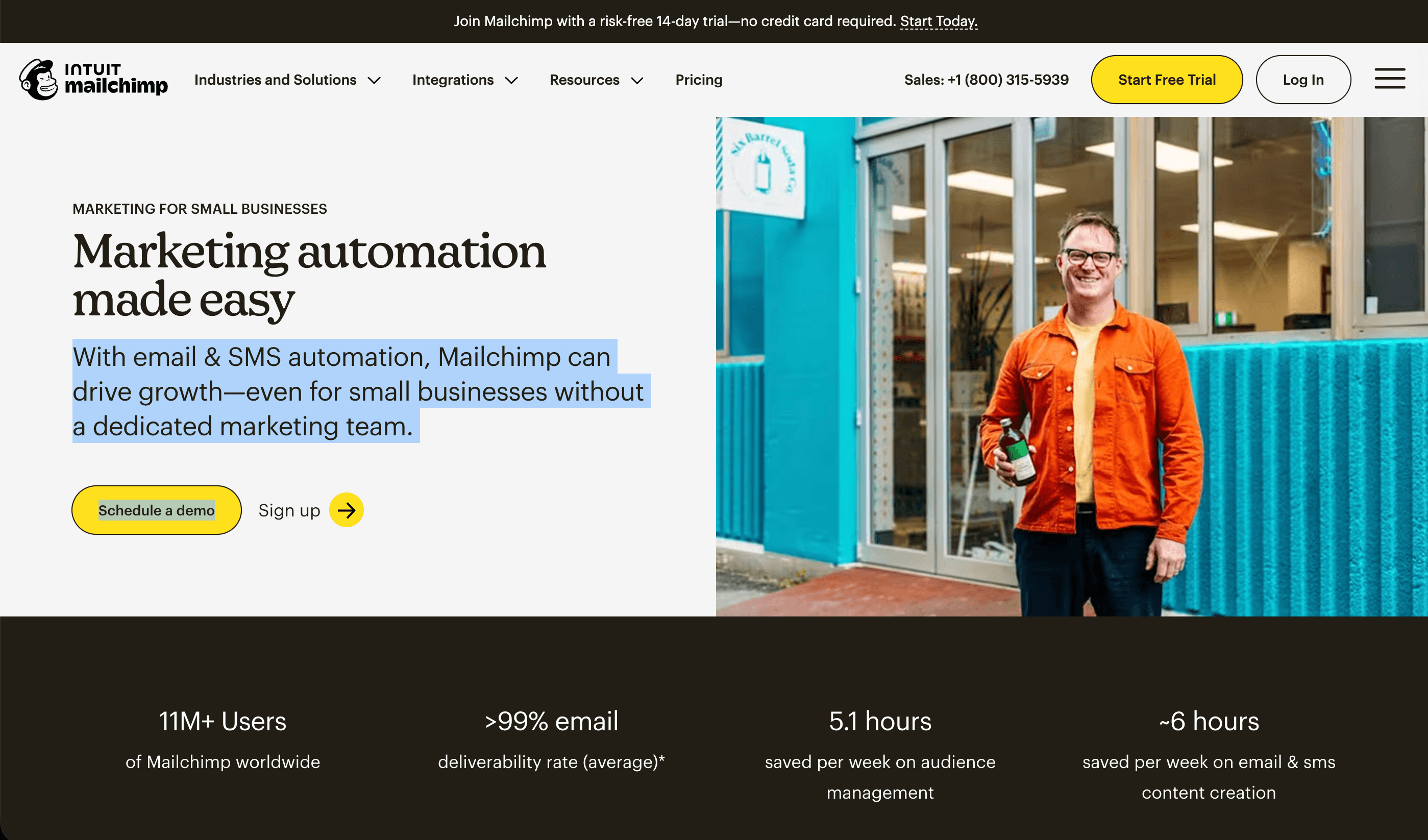
Mailchimp is not a bad platform. For small businesses sending promotional emails, managing simple e-commerce campaigns, or running basic newsletters with no monetization plans, it works fine. The free plan covers 500 contacts with 1,000 monthly sends. The template library is extensive. The brand recognition means integrations are everywhere.
If email is just one part of a broader marketing strategy and you are selling products rather than content, Mailchimp does that job reasonably well.
But if your newsletter is the product, you will outgrow it.
Where Beehiiv pulls ahead for creators
A free plan that actually gives you room
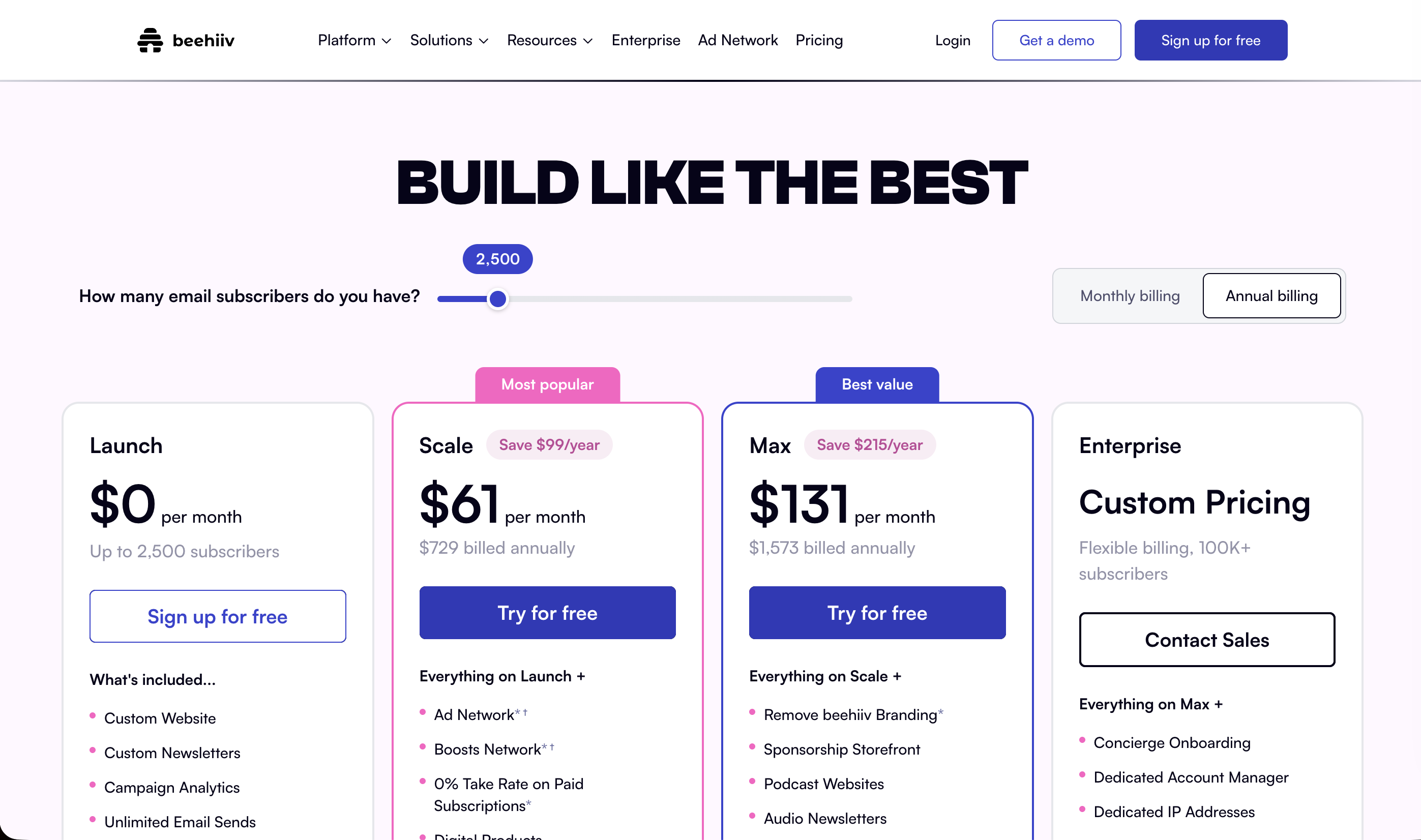
Beehiiv's free plan covers up to 2,500 subscribers with unlimited sends. Mailchimp's free plan stops at 500 contacts and caps monthly sends at 1,000. For a creator building from zero, that difference is significant. Beehiiv gives you enough room to validate your newsletter, find your voice, and start growing before you spend a dollar.
Pricing that does not punish growth
This is where the gap becomes stark. At 10,000 subscribers, Beehiiv costs $109 per month. Mailchimp's Standard plan at the same size is $385 per month. At 100,000 subscribers, Beehiiv is $329 per month. Mailchimp is $800 per month. And Beehiiv sends are unlimited on every plan. Mailchimp caps sends based on your tier.
For a newsletter that is growing, Mailchimp's pricing model becomes a real problem. You are not getting more features for that extra spend. You are just paying more because your list is bigger.
Monetization built in, not bolted on
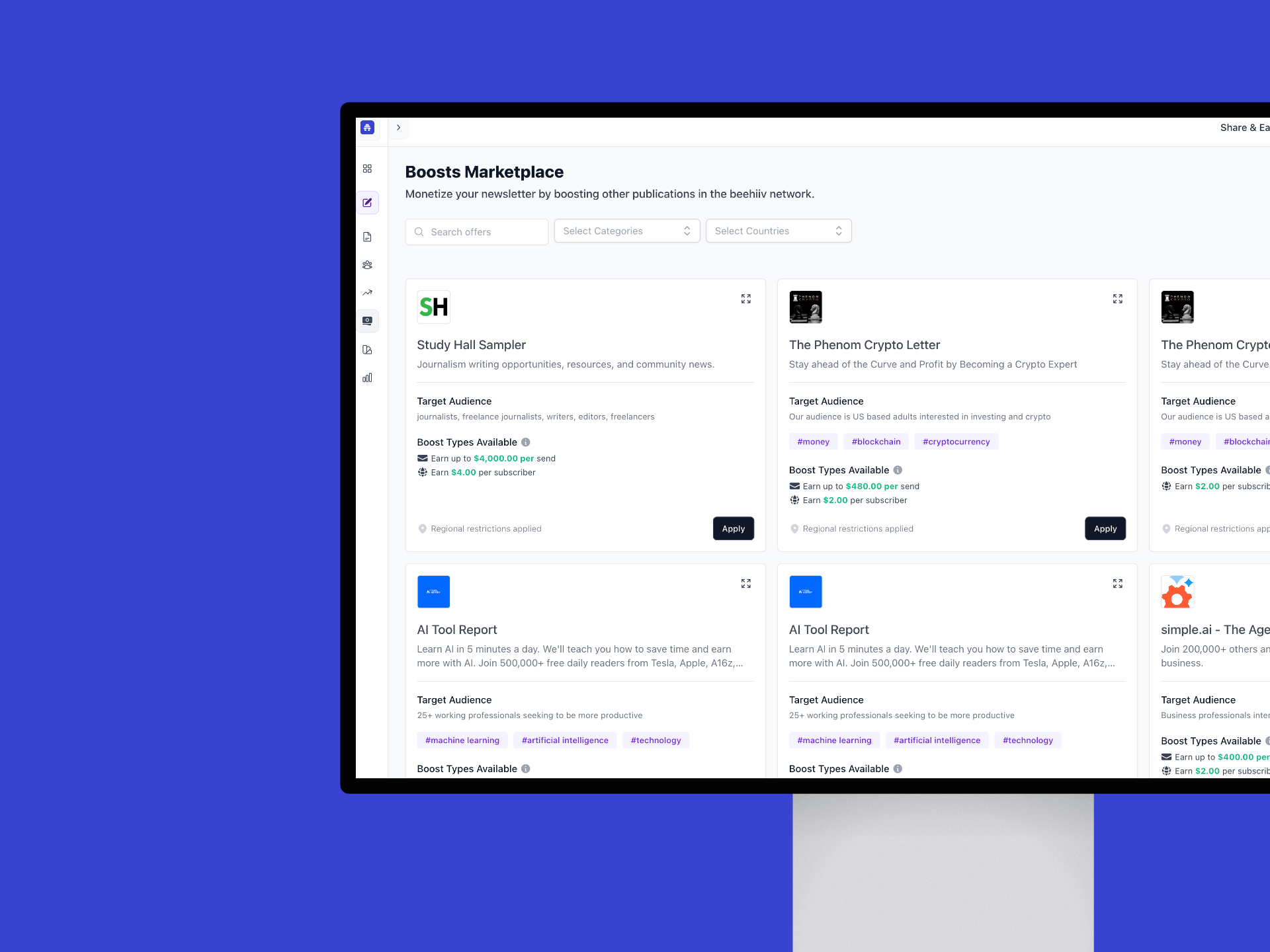
This is the biggest reason creators switch. Beehiiv has five native revenue streams that require no third-party tools:
Paid subscriptions: charge readers monthly, annually, or as a one-time lifetime access. Beehiiv takes 0% of subscription revenue. You only pay standard payment processing fees.
Digital products: sell ebooks, guides, templates, courses, or any downloadable directly through your newsletter. This is a relatively new addition and one that makes Beehiiv genuinely useful for creators who want to sell without building a separate storefront.
Ad network: Beehiiv connects you with advertisers directly. Instead of finding sponsors yourself, brands come to you through the platform's integrated network.
Direct sponsorships: manage your own sponsor relationships and track everything inside Beehiiv without switching tools.
Boosts: get paid when your readers subscribe to other newsletters you recommend. This is passive income that runs while you write.
Mailchimp has none of this. It was not designed for it. If you want to monetize a newsletter on Mailchimp, you are stitching together external tools: a Stripe integration for payments, a Gumroad account for digital products, a separate ad management process. Beehiiv removes all of that.
Newsletter-specific growth tools
Beehiiv has a built-in referral program that turns your existing readers into a distribution channel. Readers who share your newsletter can be rewarded with free issues, early access, or custom perks. The recommendation network lets newsletters cross-promote each other, which is how smaller publications grow without paying for ads. Magic links track exactly where new subscribers come from so you know what is working.
Mailchimp has landing pages and A/B testing. Those are useful tools, but they are general marketing features. They are not designed around the specific mechanics of newsletter growth.
Podcast and audio support
Beehiiv supports podcast sites and audio newsletters natively. If you run a podcast alongside a newsletter, you can host both under the same Beehiiv publication, with a dedicated podcast page and subscriber access built in. A podcaster who has been using Beehiiv for over two years described it as the platform that helped turn their podcast into something real, noting that the features kept arriving before they even had time to ask for them and that problems were typically resolved before they became frustrating. That kind of platform velocity matters when you are building something.
Mailchimp does not support podcast hosting.
Analytics that are actually actionable
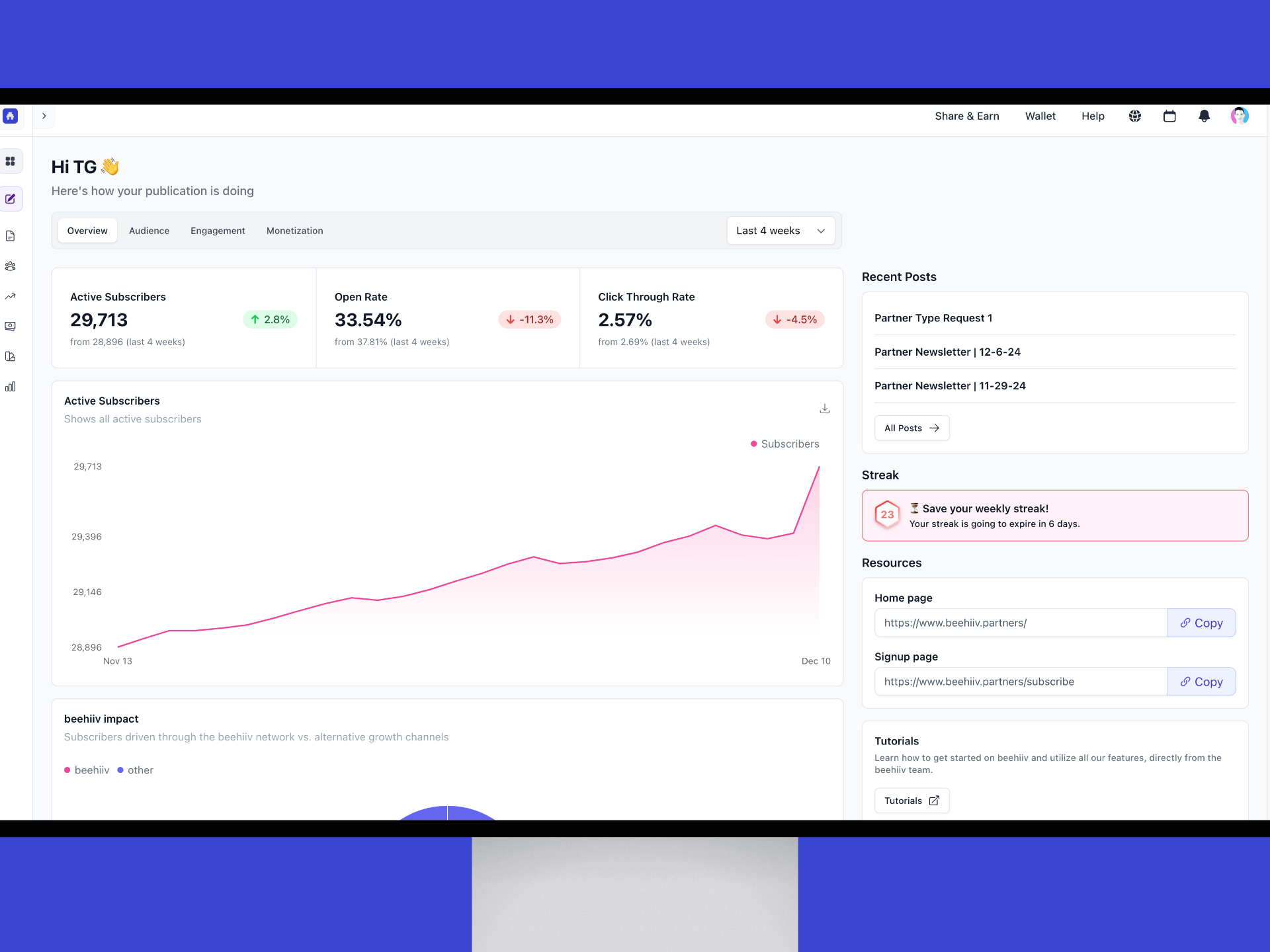
One client who has been on Beehiiv for a year and a half described the analytics dashboard as genuinely useful rather than just decorative. Open rates, click-through rates, subscriber growth over time, all presented in a way that tells you what to do next, not just what happened. They also noted the platform had not had a single outage or technical issue that affected their workflow in that entire period, which is the kind of quiet reliability that matters when your newsletter is your business. The support team, when needed, was responsive and actually helpful.
Mailchimp offers reporting, but it skews toward campaign metrics and e-commerce attribution. The analytics are built for a marketing team analyzing promotional performance, not a solo creator tracking audience growth.
The interface
Beehiiv feels modern in a way that is hard to describe until you use it. Writing, scheduling, managing your audience, everything is clean and direct. There is a slight learning curve around layouts, as one creator noted after using it to grow their newsletter, but the platform moves fast enough that most things get improved before they become a real complaint. Mailchimp's interface has grown in complexity over the years. The navigation is broader, the menus deeper, the options more numerous. For a creator who just wants to write and send, that weight adds friction.
Beehiiv pricing
Free (Launch): Up to 2,500 subscribers, unlimited sends, analytics, subscribe forms
Scale: $43/month (annual) or $49/month. Includes custom domain, referral program, paid subscriptions, ad network, digital products, boosts.
Max: $84/month (annual) or $99/month. Everything in Scale, plus priority support, advanced analytics, custom mobile apps, multiple publications.
All plans include unlimited email sends. No commission on subscription revenue at any tier.
Who should use Beehiiv

Beehiiv is the right platform if your newsletter is the product itself. That means writers, independent journalists, podcasters with a companion newsletter, consultants building a thought leadership audience, creators selling digital products, or anyone who wants to earn directly from their readers rather than using email as a marketing channel for something else.
It is also the right platform if you are serious about growth. The referral program, recommendation network, and boosts are purpose-built for newsletter distribution in a way that no general email marketing tool matches.
Who should use Mailchimp
Mailchimp makes more sense if email is one channel in a broader marketing strategy. Small businesses running occasional promotional campaigns, e-commerce stores sending abandoned cart sequences, or teams that need extensive third-party integrations with an existing tool stack. If you are not trying to monetize your newsletter directly and you do not need newsletter-specific growth tools, Mailchimp is a functional choice.
But if you are choosing a newsletter platform from scratch in 2026 with any intention of growing and monetizing your audience, there is no reason to start on Mailchimp when Beehiiv's free plan gives you more room and a better foundation.
Switching from Mailchimp to Beehiiv
Migration is straightforward. Export your contacts from Mailchimp as a CSV and import them into Beehiiv directly. Beehiiv estimates the technical migration takes about 10 minutes. Your automations will need to be rebuilt, but their support team can help map existing workflows. If you have paid subscribers, their payment method and billing cycle transfer without any disruption to readers. Beehiiv has migrated lists of 500,000+ subscribers without losing a single record.
For a full breakdown of why growing businesses switch and what the cost difference looks like at scale, see our ActiveCampaign vs Mailchimp comparison. And if you want to see how Beehiiv compares across a broader set of newsletter platforms, our guide to the best email marketing software for small businesses covers seven tools by use case.
Frequently Asked Questions About Beehiiv vs Mailchimp
More from
Tools and Apps
category