.svg)


Should a resume be one page? Usually, yes, if you are a student or recent graduate with limited relevant experience. But a two-page resume is often the better choice for professionals whose second page adds relevant achievements, specialist skills, leadership, or projects. The goal is not to meet an arbitrary page limit. It is to make your value clear quickly.
After writing resumes for more than 10 years, reviewing candidates as a hiring professional, and helping more than 500 clients, friends, and family members, I see the same issue repeatedly. People either squeeze strong experience into one crowded page or stretch weak content across two or three pages.
Your resume is your business card. It should be a focused summary of what makes you a good fit, not a complete list of everything you have ever done.
The Quick Resume-Length Rule
If you're applying for a director or C-level role, I cover this length trade-off in more detail in my executive resume guide.
When One Page Is Stronger

A one-page resume is usually the right choice for students and new graduates because it forces you to select the most relevant information. Include internships, placement years, major projects, volunteer work, and skills that support the role.
If you are a new graduate with several strong internships or a placement year, a page and a half can be reasonable. Do not add content simply because empty space makes you uncomfortable.
I once edited a three-page resume for a new graduate who used the word "communication" 24 times. That space would have been far more valuable if it showed what they actually did, what tools they used, and what results they achieved.
When a Two-Page Resume Is Better
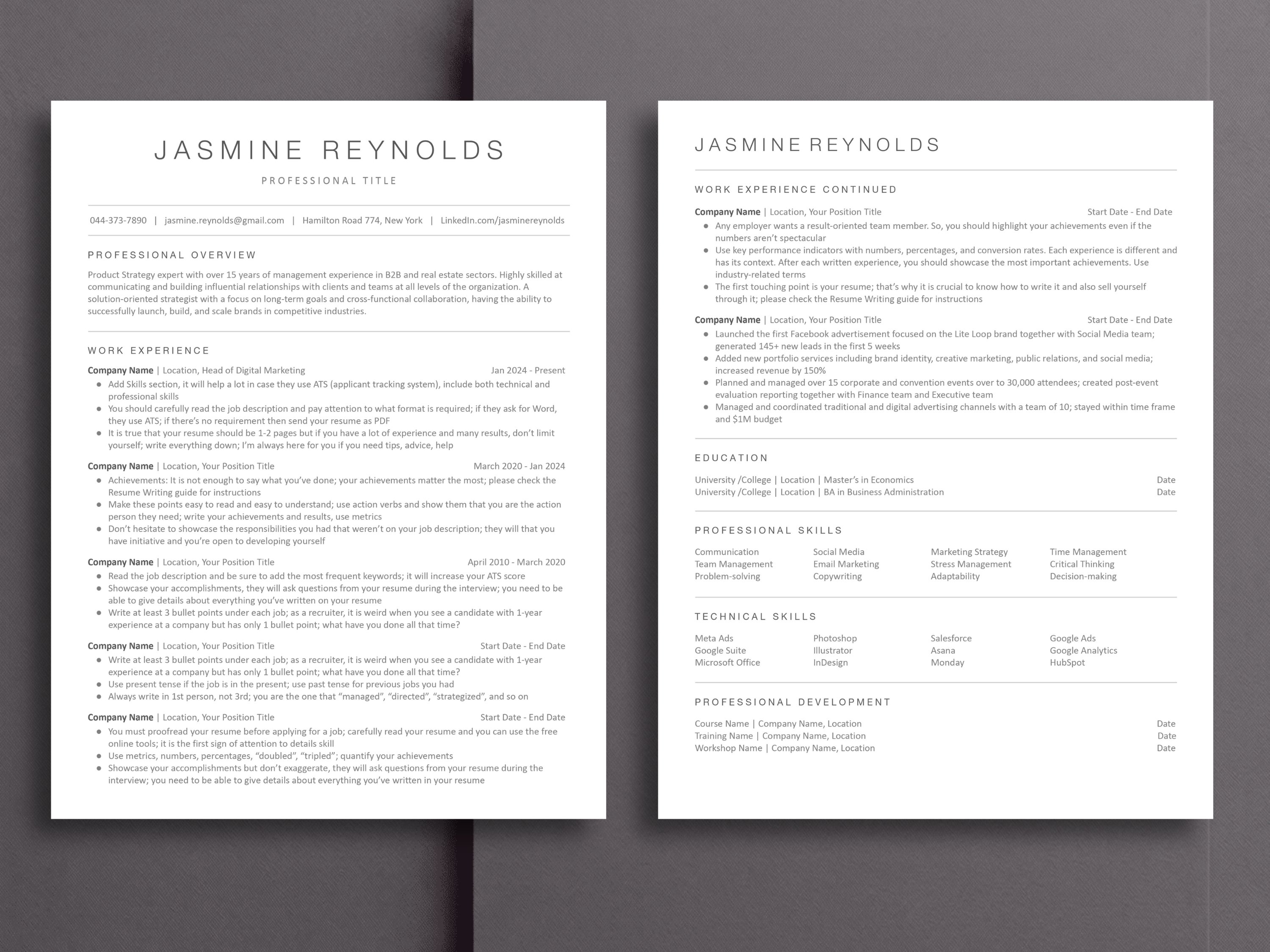
A two-page resume is not bad when the second page earns its place. Use it when it helps a recruiter understand why you are qualified for the role.
A second page can make sense if you need room for:
- Relevant, measurable achievements.
- Management or leadership responsibilities.
- Specialized software, technical skills, certifications, or methods.
- Major projects that demonstrate your work.
- Earlier experience that supports a career change.
- A coherent story across different industries.
For example, I have helped connect marketing and aerospace experience into one natural career story. The key was not listing every duty from both fields. It was selecting the experience that demonstrated transferable skills and made sense for the target role.
Do Recruiters Really Only Look at One-Page Resumes?
No. Recruiters do not automatically stop reading because a resume has a second page. What matters more is whether the resume is easy to scan and whether every section helps show that you are a strong fit for the role.
In my experience reviewing resumes and interviewing candidates, a focused two-page resume is better than a crowded one-page resume that cuts important achievements, leadership experience, or relevant projects. The issue is not the page count. The issue is whether page two adds useful evidence or simply repeats duties and generic skills.
Use one page if you are a student, recent graduate, or have limited relevant experience. Use two pages when the additional space helps explain your expertise, career progression, technical skills, certifications, or results. Recruiters are looking for relevant information quickly, not enforcing a universal one-page rule.
What to Cut First
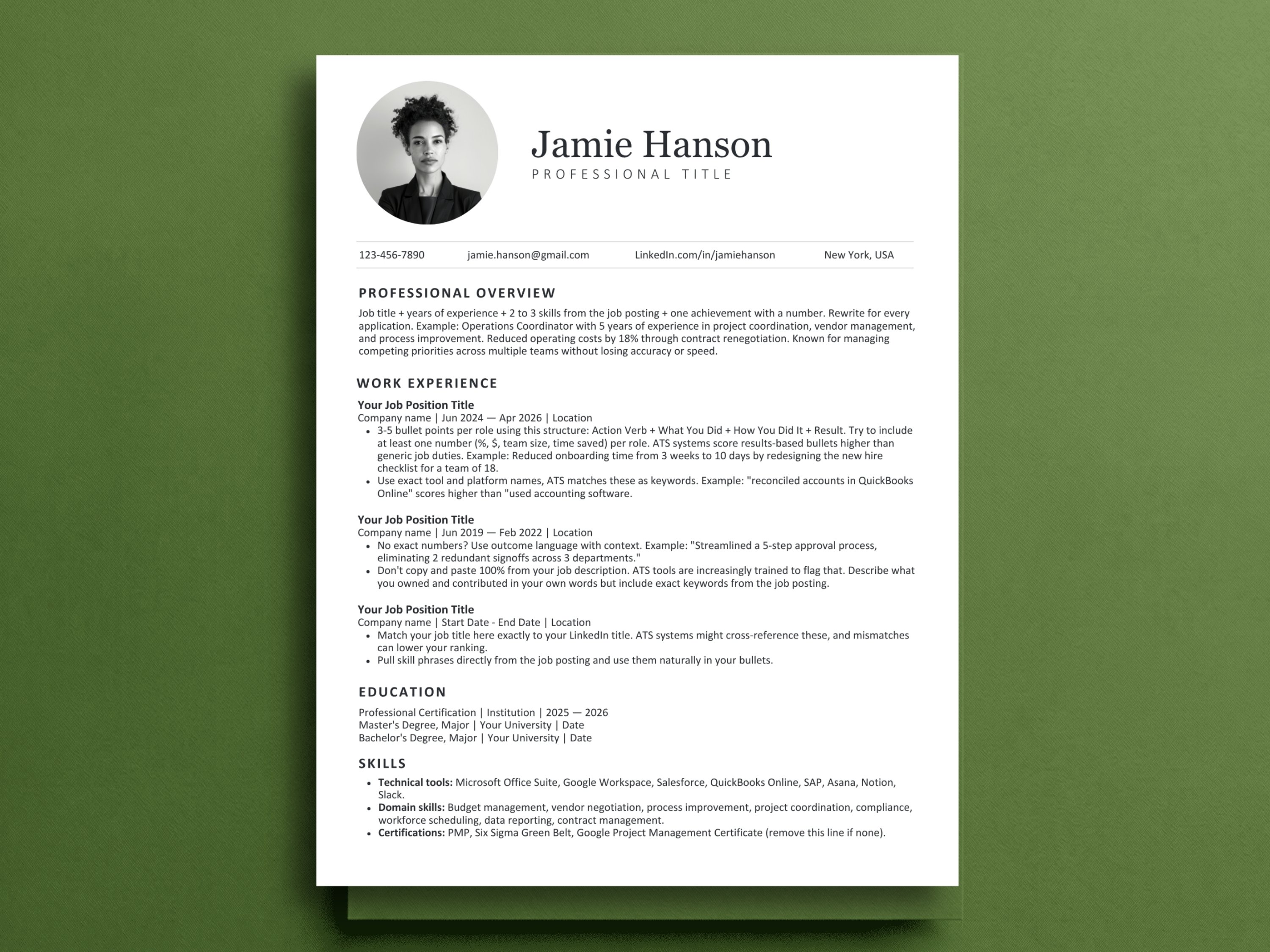
A resume should be an overview of your relevant experience, not a job-description archive. Before adding a second page, remove or shorten:
- Repetitive duty-only bullet points.
- Old roles that do not support the position you want.
- Generic skills such as "teamwork," "communication," or "time management."
- Long paragraphs and duplicated information.
- Details that do not show your value to the specific employer.
Instead, make every bullet point work harder:
Action verb + what you did + how you did it + result, if known.
For example: "Improved email campaign performance by testing subject lines and audience segments, increasing click-through rate by 18%."
Tailor your skills section too. Name the tools, platforms, systems, and methods required for the role. A resume for a marketing coordinator should not look identical to one for an aerospace project assistant, even if the candidate has experience in both areas.
Is a One or Two-Page Resume ATS-Friendly?
Both a one-page and a two-page resume can be ATS-friendly resume. Length is not the issue. Readability and text structure are.
When an applicant tracking system is likely to scan your application first, use a clean, single-column layout with normal fonts and straightforward section headings. Avoid images, graphs, unusual fonts, and complicated design elements. PDF and DOCX are generally appropriate, but always follow the application's requested file format.
Be careful with Canva resumes. They can look great, but some layouts may export text in the wrong order for parsing.
My quick self-check is simple: download your resume as a PDF, open it in a web browser, copy all text, and paste it into a plain-text editor. If the information appears in the correct order and reads clearly, that is a good basic sign that the text is extracting properly. It is not a guarantee for every ATS.
If you know a person will review your resume first, you may have more flexibility with color or a two-column design, depending on the industry.
Use one page when that is all the relevant evidence you have. Use two pages when page two makes your qualifications clearer. Do not add filler or shrink your font just to follow a resume-length myth.
Resume Length FAQs
More from
Resume and Career
category