.svg)


A friend of mine runs a dog grooming salon. She is good at what she does, her clients trust her, and over the years she built up enough expertise that people started asking if she taught classes. So she built a home grooming course and spent weeks researching where to sell it.
Her requirements were specific: the platform had to be affordable, it had to have an affiliate program so her existing clients could refer others and earn a small commission, and it had to be simple enough that she could set it up herself without hiring anyone. She had no experience with affiliate marketing and no technical background. She just needed it to work.
After all that research, she landed on Teachable.
So I went and looked myself. I have spent over 10 years managing and scaling affiliate programs for companies, which means I have seen a lot of affiliate dashboards, good and bad. I went and looked at several platforms myself. What I found changed what I would recommend to anyone starting where she did.
One more thing before the list. I originally planned to include Thinkific. It is a well-known platform with a solid feature set and appears on almost every competitor roundup. But after reviewing recent user feedback on Trustpilot, I decided against it. Multiple reviewers reported unexpected charges after cancellation, difficulty removing payment details, and billing disputes that took weeks to resolve. That pattern is a red flag for a small business owner who cannot afford billing surprises. I have noted it here so you can make your own decision, but I am not comfortable recommending it.
At a Glance: Best Platforms to Sell Online Courses in 2026
How to Think About Choosing a Platform
Most people start the wrong way. They search for "best online course platform," read a list, pick the one with the most features, and sign up. Then they spend three months learning a tool that was built for a different kind of business than theirs.
The right starting point is three questions. What are you selling, and how many products do you plan to have? How do you plan to bring in students: organically, through ads, or through other people promoting your course? And what is the realistic budget, not just for month one, but once your list starts growing?
The affiliate question matters more than most people realize. If you want students or partners to refer others and earn a commission, you need to know which platforms include that feature, at which plan level, and how well it actually works. Several platforms in this list lock affiliate behind mid-tier or high-tier plans, which can double your monthly cost the moment you want to activate it.
The transaction fee question also matters. Some platforms charge 7.5% of every sale on their entry plans on top of the monthly fee. On a $200 course selling 10 units a month, that is $150 a month in platform fees before you have paid for anything else. Always calculate your real cost at your expected sales volume, not just the headline price.
1. Systeme.io: Best for Budget-Conscious Creators Who Want Everything Included
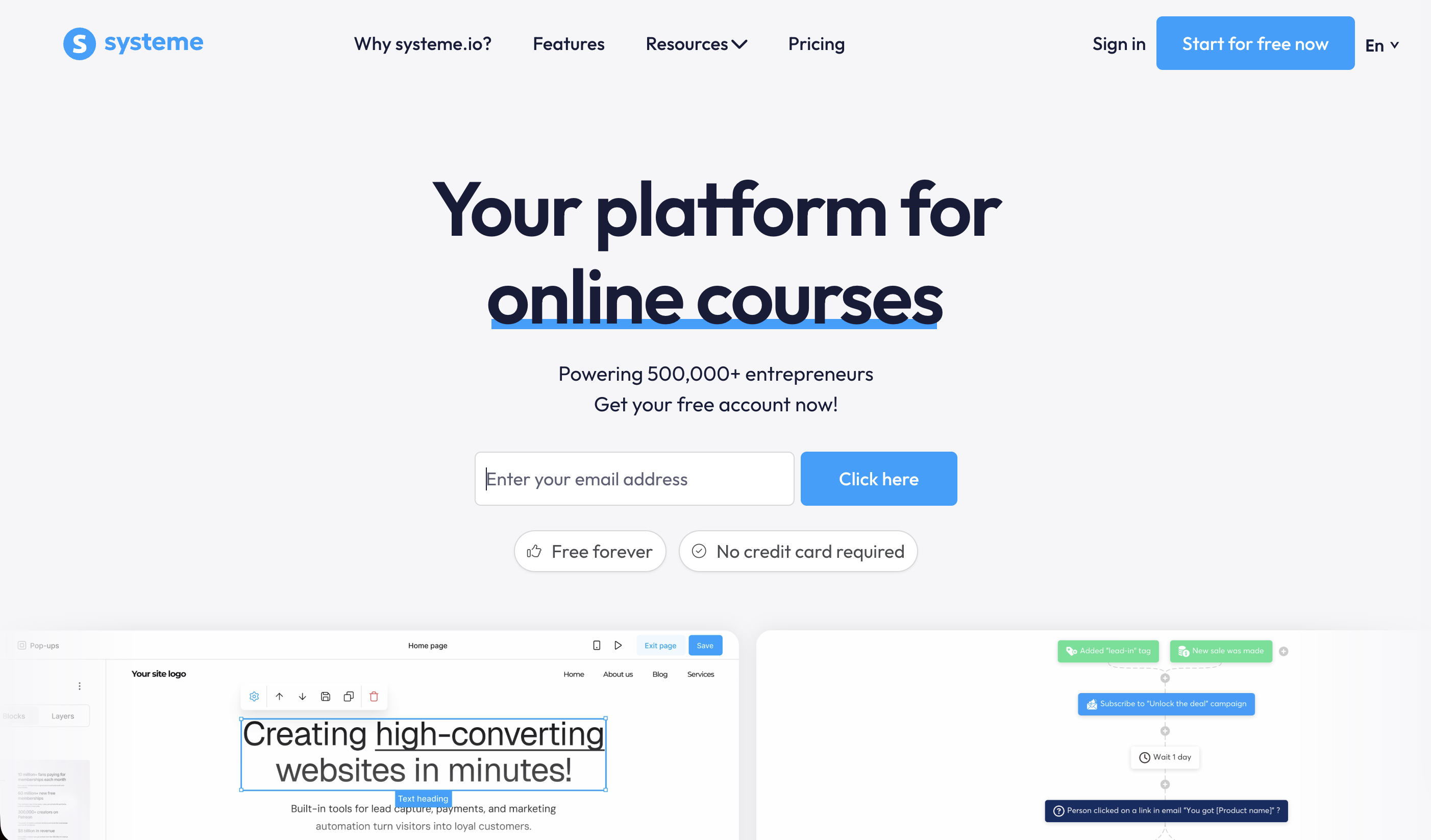
The problem most small business owners run into when launching a course is not building the content. It is realizing that the platform they chose does not include the tools they need, and that adding those tools means upgrading to a plan that costs twice as much. Systeme.io was built to avoid that problem entirely.
Every plan, including the permanent free plan, includes course hosting, email marketing, sales funnels, a website builder, and an affiliate program. That combination at zero cost is genuinely unusual. Competing platforms charge $89 to $199 per month for the same set of features.
I tested Systeme.io myself while researching options after my friend's Teachable experience. The UX is noticeably better than I expected: things are where you expect them to be, labels are clear, and you rarely need documentation to figure out what a button does. The affiliate setup in particular stood out. It is not buried or complicated. You set your commission rate, generate a shareable link, and Systeme.io tracks referrals automatically. The whole process took a fraction of the time it takes on Teachable.
After testing it, I recommended my friend move over from Teachable. Her requirements, an affordable platform with a real affiliate program, are met here at a lower price than what she is currently paying. She is evaluating the switch and I will update this article with her experience once she decides.
The trade-off is polish. Kajabi and Podia have more refined interfaces and better-looking default templates. If visual presentation matters a great deal to your brand, Systeme.io is functional but not beautiful. The course player is clean rather than impressive.
Best for: Small business owners and first-time course creators who want to launch quickly, keep costs low, and need affiliate functionality without paying extra for it.
💲 Pricing: Free plan available (1 course, 2,000 contacts, affiliate included). Paid plans from $27/mo.
⭐️ Trustpilot: 4.8 out of 5 from over 8,000 reviews. Consistently praised for support quality and value. One pattern that comes up repeatedly: the support team sends screen recordings to walk users through problems rather than sending generic replies.
👉 What makes it different: The only platform in this list that includes an affiliate program on its free plan. Everything else either locks affiliate behind a paid tier or does not offer it without an upgrade.
Alternatives to consider: If you need a more polished course experience or plan to sell coaching and digital downloads alongside courses, Podia is worth comparing. If you are already generating significant revenue and need full marketing automation, Kajabi is the step up.
2. Podia: Best for Creators Selling More Than Just Courses
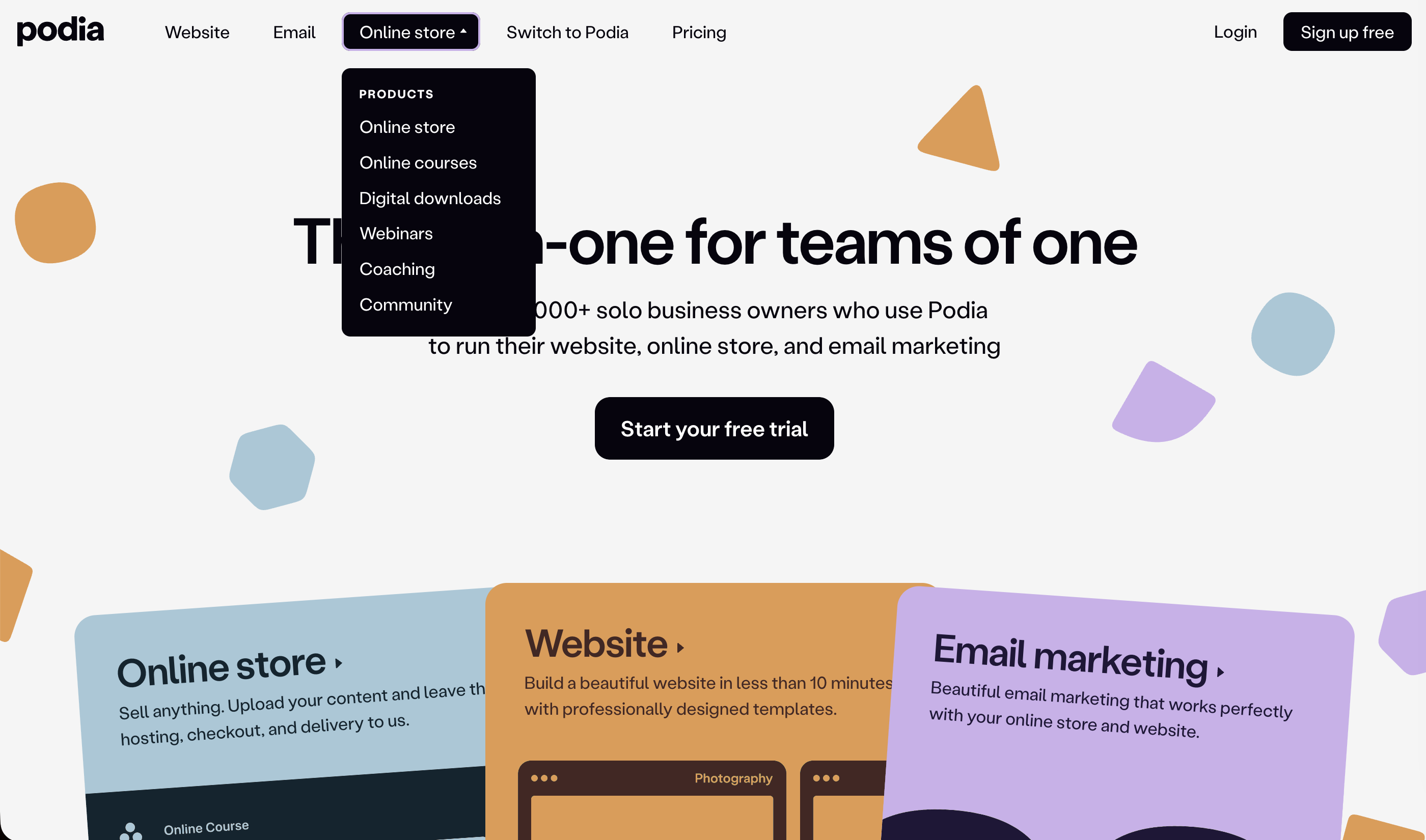
Podia is built for the kind of creator who does not just sell one thing. Courses, digital downloads, webinars, coaching sessions, community memberships: all of it lives in one place under one subscription. If you have a dog grooming salon and want to sell a video course, a downloadable grooming checklist, a one-on-one consultation package, and a monthly community membership for dedicated owners, Podia handles all of that in a single account without needing external tools for each product type.
If your product is really just the checklist itself, a standalone template or printable rather than a full course, a dedicated digital download platform will usually cost less than a course platform's monthly fee. We compared the best Etsy alternatives for selling digital downloads if that's closer to what you're building.
The setup experience is genuinely beginner-friendly. The interface is clean, the steps are logical, and the platform does not overwhelm you with options you are not ready for. Several recent Trustpilot reviewers specifically mention being non-technical and finding Podia approachable in a way that other platforms were not.
The important thing to know about Podia's pricing is that the affiliate program is only available on the Shaker plan at $89 per month. The entry Mover plan at $39 per month also charges a 5% transaction fee on every sale. If you want both zero transaction fees and the affiliate feature, you are starting at $89 per month. Podia also removed its free plan in late 2024, which generated real frustration from creators who had built their setup on it.
Best for: Creators who sell a mix of digital products and want everything on one platform, and who are comfortable paying $89 per month for the full feature set including affiliate.
💲 Pricing: No free plan. Free trial: 30 days. Paid plans from $39/mo (5% transaction fee). No transaction fees and affiliate program from $89/mo (Shaker plan).
⭐️ Trustpilot: 3.6 out of 5 from 110 reviews. Strong 5-star reviews praise the simplicity and support. The 1-star reviews are largely from creators frustrated by the removal of the free plan and the pricing jump it created.
👉 What makes it different: The strongest combination of digital product types in one place. No other platform in this list handles courses, downloads, webinars, coaching, and community as cleanly as Podia does at the Shaker tier.
Alternatives to consider: If budget is the priority and you primarily need courses with affiliate, Systeme.io gives you more for less. If you need full marketing funnels and email automation at scale, Kajabi is the upgrade path.
3. Kajabi: Best for Established Creators Who Want One Platform for Everything
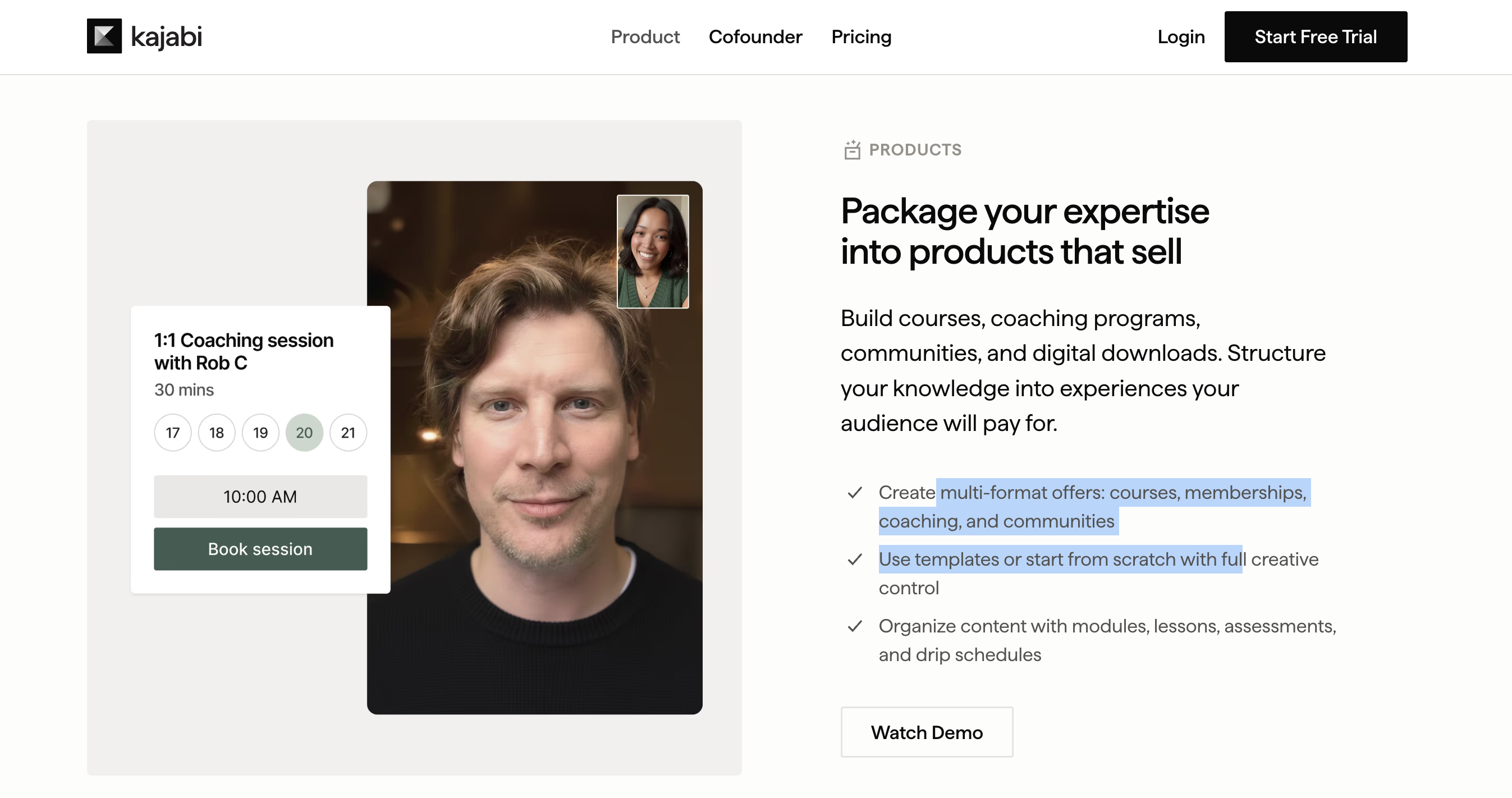
Kajabi is the platform that long-term course creators tend to land on when they are tired of patching together five different tools. It handles courses, coaching programs, membership communities, email marketing, landing pages, sales funnels, and payments all from one dashboard. For someone running a real online business with multiple products and an active email list, that consolidation saves time and removes the integration headaches that come with using separate tools.
The January 2026 pricing overhaul changed the picture significantly. Kajabi removed its entry-level Kickstarter plan and raised prices across the board. The cheapest plan now starts at $143 per month on annual billing. More significantly, the affiliate program is locked behind the Growth plan at $199 per month. For a creator who wants to use affiliates from the start, Kajabi requires a $199 monthly minimum before that feature is even available.
That said, the Trustpilot reviews tell a consistent story about why people stay. Long-term users describe the platform as the backbone of businesses generating significant revenue, and the support reputation, particularly at higher tiers, is strong. One reviewer who has been a customer for nearly a decade wrote that team leads have personally jumped on calls to help solve problems. The loyalists are genuinely loyal, and the reason is usually the same: it works, and when something goes wrong the support is real. The AI support additions in 2025 and 2026 have generated some mixed feedback though, with several users reporting it could not resolve their issue and created friction in reaching a human.
Best for: Creators who are already generating consistent revenue, have multiple products, and want to replace several separate tool subscriptions with one platform.
💲 Pricing: No free plan. Free trial: 14 days. Paid plans from $143/mo (annual billing). Affiliate program from $199/mo (Growth plan, annual billing).
⭐️ Trustpilot: 3.5 out of 5 from over 2,298 reviews. A strong community of long-term advocates alongside growing frustration about the January 2026 price increases and AI support replacing human contact for tier-one issues.
👉 What makes it different: The most complete all-in-one system for running a knowledge business. Courses, communities, coaching, email, funnels, and payments in one place with no integrations required.
Alternatives to consider: If the price is the barrier, Systeme.io covers most of the same functionality at a fraction of the cost. If you only need course delivery without the full marketing stack, Teachable is simpler and cheaper.
4. Teachable: Best for First-Time Course Creators Who Want a Simple Start
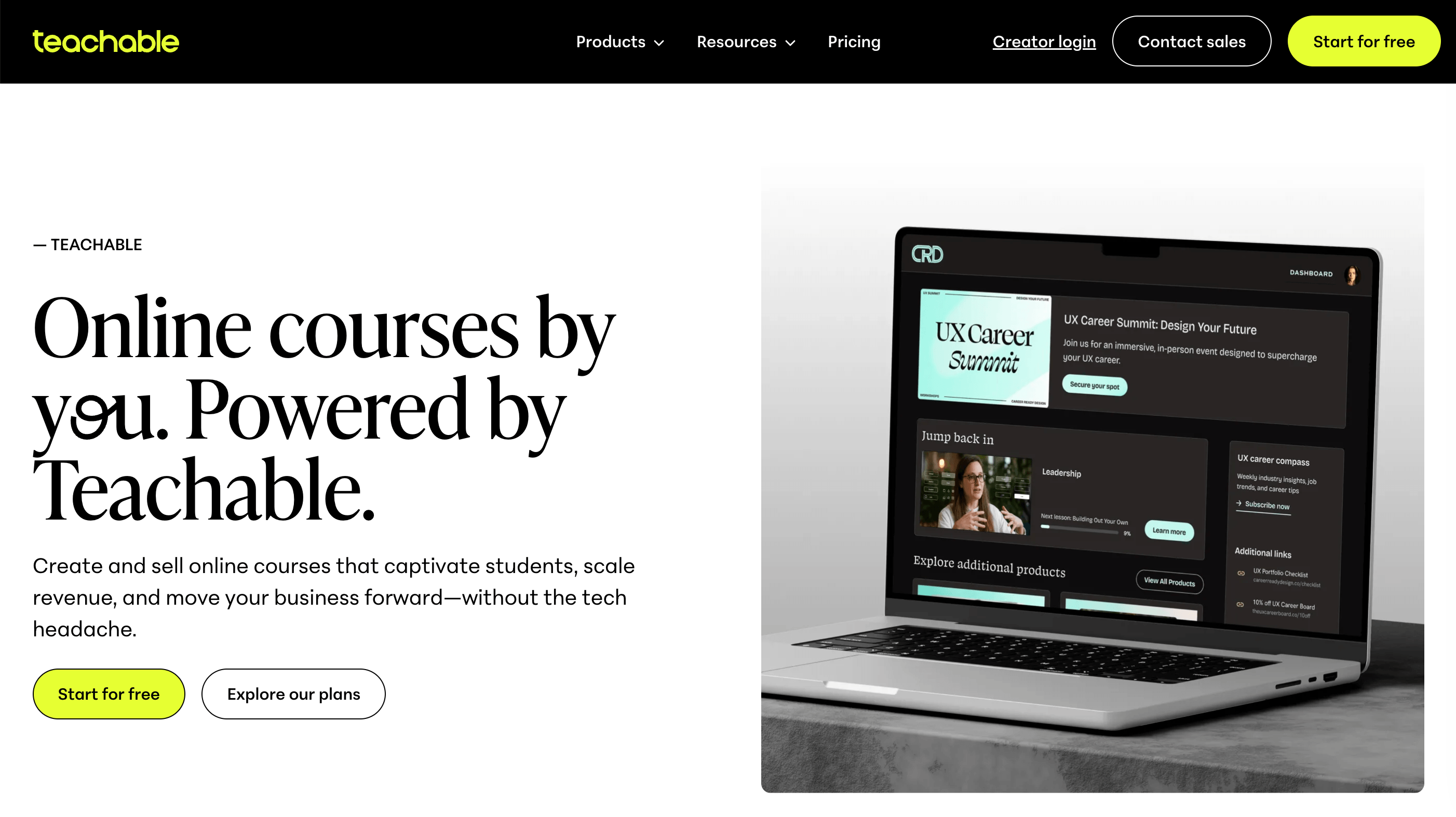
Teachable built its reputation on simplicity, and that reputation is still deserved at the product level. The course builder is straightforward, the checkout process is clean, and the platform handles payment processing, tax compliance, and VAT automatically across different countries. For a first-time creator who wants to upload content, set a price, and start selling without a week of setup, Teachable delivers that experience.
This is what my friend chose after her research. It felt approachable, she had heard of it, and it had the affiliate feature she needed. What she found after setting it up is what I found when I looked at it with my own background: the affiliate dashboard works, but it was clearly not built with affiliate marketers in mind. The reporting is basic, the interface is not intuitive, and finding key information requires more clicking than it should. For someone who has never run an affiliate program before, it is probably fine. For anyone who has managed affiliates professionally, it feels like something added to tick a box rather than genuinely serve that use case.
The 2025 pricing changes also created real frustration among existing users. The free plan was removed. Transaction fees of 7.5% apply on the Starter plan. The Builder plan at $89 per month removes transaction fees and unlocks the affiliate program, but that is a meaningful price for someone just getting started, especially when cheaper alternatives now exist with better affiliate UX.
Best for: First-time course creators who primarily need clean course delivery and basic marketing features, and who are not running a serious affiliate program.
💲 Pricing: No free plan. Free trial: 7 days. Paid plans from $39/mo (7.5% transaction fee). No transaction fees and affiliate program from $89/mo (Builder plan).
⭐️ Trustpilot: 3.1 out of 5 from over 1,042 reviews. Positive reviews focus on ease of use and course builder quality. Negative reviews cluster around pricing increases, slow support response times, and features being removed or locked behind higher tiers.
👉 What makes it different: The easiest course builder for non-technical creators, with strong payment processing and international tax handling. No other platform in this list manages VAT and global tax compliance as smoothly out of the box.
Alternatives to consider: If you are starting fresh and cost matters, Systeme.io gives you a better affiliate experience at a lower price. If you want a broader digital product setup, Podia handles more product types without requiring separate tools.
3 Things to Check Before You Sign Up for Any Course Platform

1. Calculate your real cost at your expected sales volume, not just the plan price. A platform at $39 per month with a 7.5% transaction fee costs more than a platform at $89 per month with no transaction fee if you are selling $200 courses regularly. Run the numbers at 5 sales per month, 20 sales per month, and 50 sales per month before you decide. The headline price is almost never the real price.
2. Test the affiliate setup during the trial, not after you commit. If affiliate marketing is part of your plan, go through the full process: create a test affiliate, generate a link, make a test purchase, and check what the affiliate sees in their dashboard. The difference between a good affiliate UX and a functional-but-frustrating one only becomes obvious when you actually try to use it. This was the single biggest thing I learned from my friend's experience.
3. Check Trustpilot before signing up for an annual plan, specifically the recent 1-star reviews. Not because one-star reviews are always fair, but because patterns in them are revealing. Billing issues that repeat across multiple reviewers, difficulty canceling, and slow support responses tend to be real operational problems rather than one-off complaints. The Trustpilot scores in this article were a significant factor in which platforms made the final list and which did not.
One Thing That Surprised Me
The platform with the best Trustpilot score in this category is also the cheapest. Systeme.io scores 4.8 out of 5 from over 8,000 reviews, which puts it above every other platform in this list by a significant margin. The usual assumption in software is that you get what you pay for. In this case the correlation runs the other way. The platforms charging the most are not the ones getting the best feedback from users. Systeme.io's support model, where agents send screen recordings to walk users through problems rather than sending generic replies, clearly builds more trust than AI chatbots at twice the price. That is the kind of thing that does not show up in a feature comparison but matters enormously when you are stuck at 11pm trying to fix something before a launch.
More from
Tools and Apps
category