.svg)


If you've been sending applications into the void and hearing nothing back, it's not necessarily your resume. It might be where you're looking.
Up to 70% of jobs are never publicly advertised. They're filled through referrals, direct outreach, and internal networks before a job board ever sees them. This is called the hidden job market, and it's where I found my job.
Here's exactly what I did.
I Stopped Waiting for Job Ads
Most people's job search looks like this: open LinkedIn, filter by remote, apply, wait, repeat. I was doing the same thing. I sent over 20 applications to open positions and got almost no response.
Then I flipped the approach entirely.
Instead of searching for open roles, I started searching for companies I actually wanted to work for. I looked at their culture, their product, their values, how they talk about their team online. If something felt right, I reached out even if they had zero relevant openings posted.
The result: 9 out of 10 companies I emailed this way replied. 6 wanted to chat further. Only 1 ignored me completely. That's a 90% response rate, compared to the roughly 30% I got from applying to open positions the traditional way.
And eventually, I got my dream job by messaging the CEO directly on LinkedIn. More on that below.
How to Find Companies Worth Reaching Out To
This step matters more than the email itself. Reaching out to a random list of companies won't work. You need a genuine reason to want to work there, because that comes through in the email.
Here's the research flow I actually use:
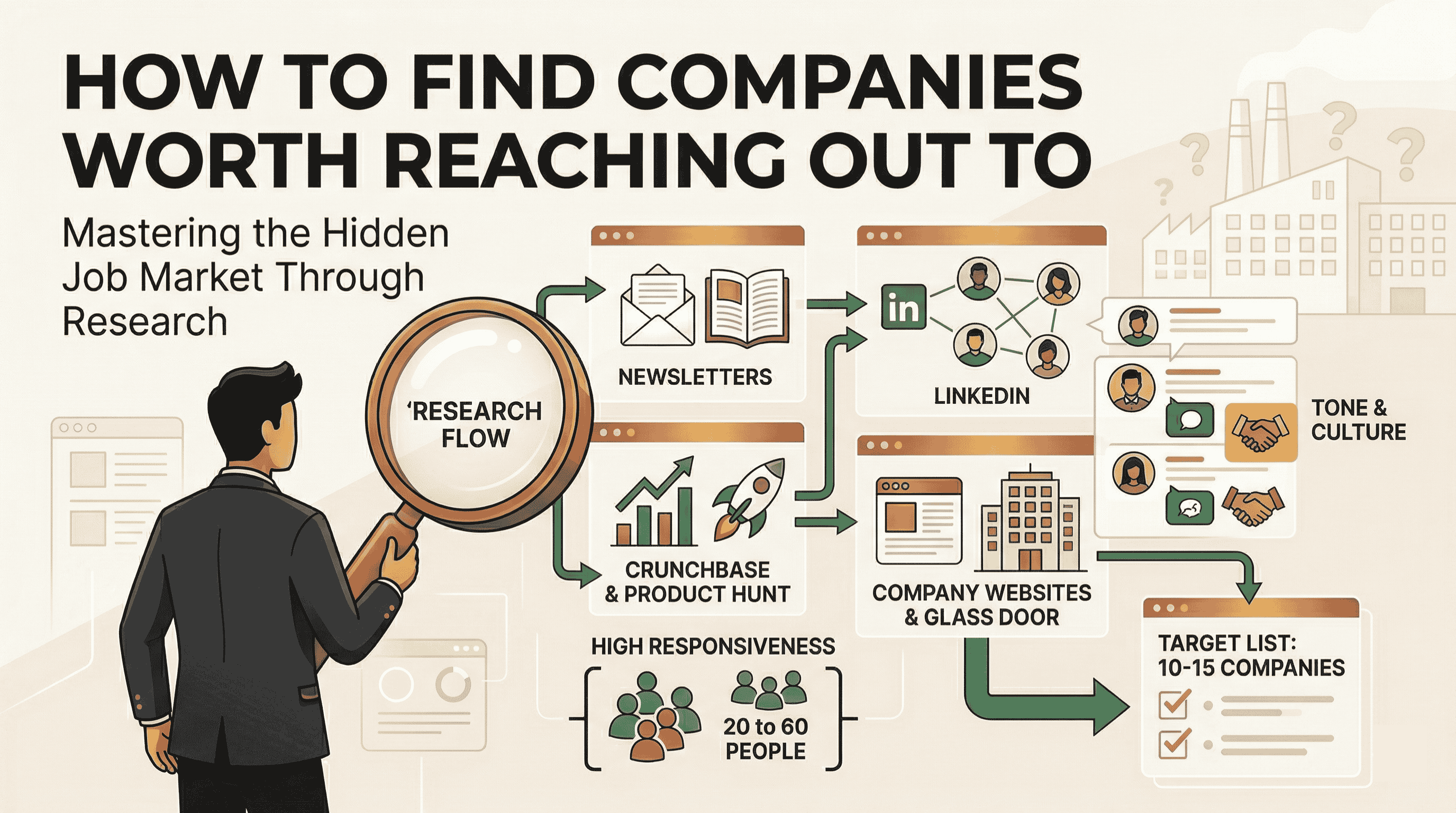
I subscribe to newsletters in my field. They often mention or promote tools and products, and when something stands out I research the company behind it. From there I use LinkedIn, Crunchbase, or Product Hunt to find similar companies in the same space, then narrow them down by size and location.
I visit each company's website, read their blog if they have one, and look at how they communicate on LinkedIn. The tone of their posts and how their leadership interacts with others tells you a lot about culture before you ever speak to anyone. I also check Glassdoor, but I don't rely on it fully. Reviews there can be unreliable, especially for smaller companies.
One thing I've noticed: companies with 20 to 60 people tend to be far more responsive. It's easier to reach the right person, and the whole interaction feels more human. Big corporations aren't impossible, but the process is slower and more layered.
Once I have a shortlist of 10 to 15 companies that genuinely interest me, I move to the email.
The Email I Sent
I didn't write a cover letter. I wrote a short, direct email, the kind you'd send to a real person rather than an HR system.
One thing I add that most people don't: somewhere in the email I include a line like "I appreciate your response, even if it's negative." It sounds small, but it signals that you're not going to disappear if they say no, and it removes the pressure to ignore you. I think it contributed to my unusually high response rate.
Here's the exact template:
Who to send it to: Don't send it to a generic careers@ or contact form. Those rarely reach anyone useful. Use LinkedIn to find the hiring manager or team lead in the department you'd be joining. If you can't find their email, use Hunter.io, type in the company domain and it shows verified email formats. You can also guess using the format it suggests, like firstname@company.com, and it works more often than you'd expect.
For smaller companies, go straight to the CEO. I once messaged a CEO directly on LinkedIn after applying through their job ad for a role I wasn't a perfect fit for and heard nothing back for a week. He replied within an hour and invited me for an interview. That company ended up being the one where I got my dream job.
The Resume I Attached
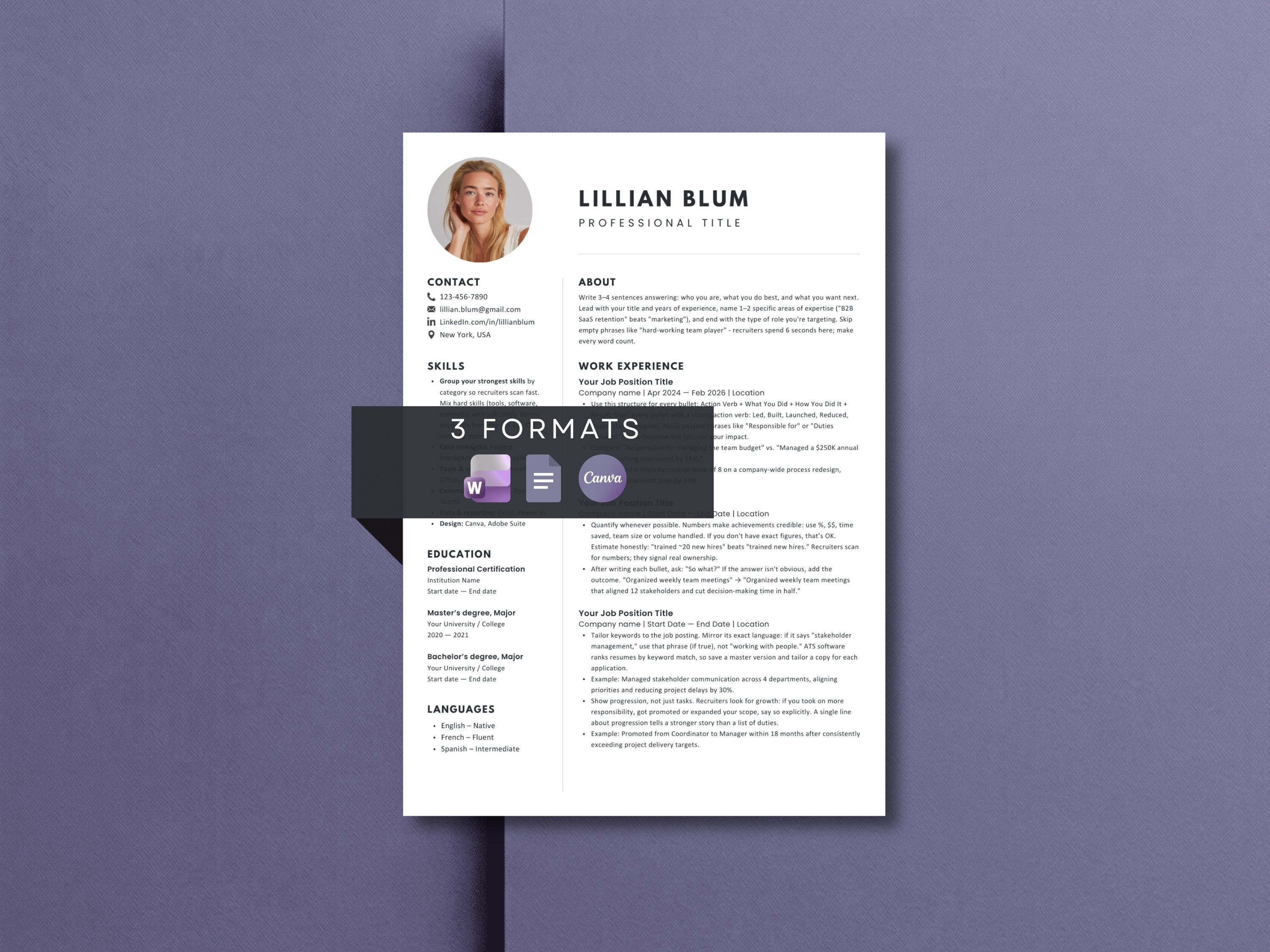
My resume is clean and easy to read. I tailor it slightly for each company, but I don't rewrite it from scratch every time. What I adjust is the professional title and the About section, just enough to mirror the company's language and priorities.
For example, for a creative brand I'd highlight storytelling and content. For a startup I'd emphasize growth and digital strategy. Instead of just "Digital Marketing Specialist," I'd write something like "Digital Marketing and Growth Specialist, helping startups build online presence." It's less about guessing a title and more about making it feel like a natural fit.
A few other things I did:
- Saved the file as Firstname_Lastname_Position.pdf
- Added keywords from the company's other open job ads to align with what they're already looking for
- Kept my LinkedIn profile updated, because many hiring managers clicked it within hours of opening my email. In one case, multiple people from the same company including a team lead viewed my profile the same day.
- Included my photo. I always assumed photo resumes weren't ATS-friendly, but one interviewer told me mine passed through their system without issues. Heavy keyword customization in the content probably helped more than the format itself.
I used this resume template from my Etsy shop. Clean layout, easy to edit and professional without being over-designed. If you're interested in seeing more templates that can help you land more interviews, have a look at our article Best Resume Templates: Best Resume Templates.
Why This Works Better Than Applying Online

When you apply to a posted job, you're competing with hundreds of people who found the same listing. When you email a company directly, you're often the only person in that conversation.
Companies are frequently having internal discussions about hiring even when nothing is posted publicly. A well-timed email from the right person can accelerate that decision or create a role that didn't formally exist yet.
The hidden job market isn't a secret or a hack. It's what happens when you stop being reactive and start being deliberate about where you want to work.
If you haven't tried it, you have nothing to lose.
If you're looking for remote job opportunities, we've rounded up the best remote job sites and job boards to help you build your target company list.
Frequently Asked Questions About the Hidden Job Market
More from
Resume and Career
category