.svg)


I used to recommend Mailchimp to almost every small business owner I worked with. It was simple, free to start and honestly, pretty hard to mess up. That was the point.
Then something changed. Not overnight. Gradually. Mailchimp kept adding features, tabs, sub-menus, options within options. The platform that once made email marketing accessible started feeling like it needed its own manual. I noticed it myself and then I started hearing it from clients too.
One came to me completely burned out. Every time she tried to set up a campaign, integrate a new tool or just organize her contacts, something went wrong. She wasn't doing anything exotic. Just the basics. But the basics had become a fight.
Another had been on Mailchimp for years, bill consistently around $100 a month. His SaaS grew fast. Twenty thousand users in January. Suddenly his Mailchimp invoice hit $500. He was sending two email blasts a month and a two-email welcome sequence. Nothing had changed on his end. The platform's pricing model had just finally caught up with him.
That's the moment I want to talk about in this article. Not whether Mailchimp is bad (it isn't, for the right use case). There's a specific inflection point where it stops being the right email marketing software for a growing business and most people don't recognize it until they're already frustrated.
If you're on Mailchimp and starting to feel the friction, this is for you.
Where Mailchimp Still Makes Sense
Let's be honest first. Mailchimp built its reputation for good reason.
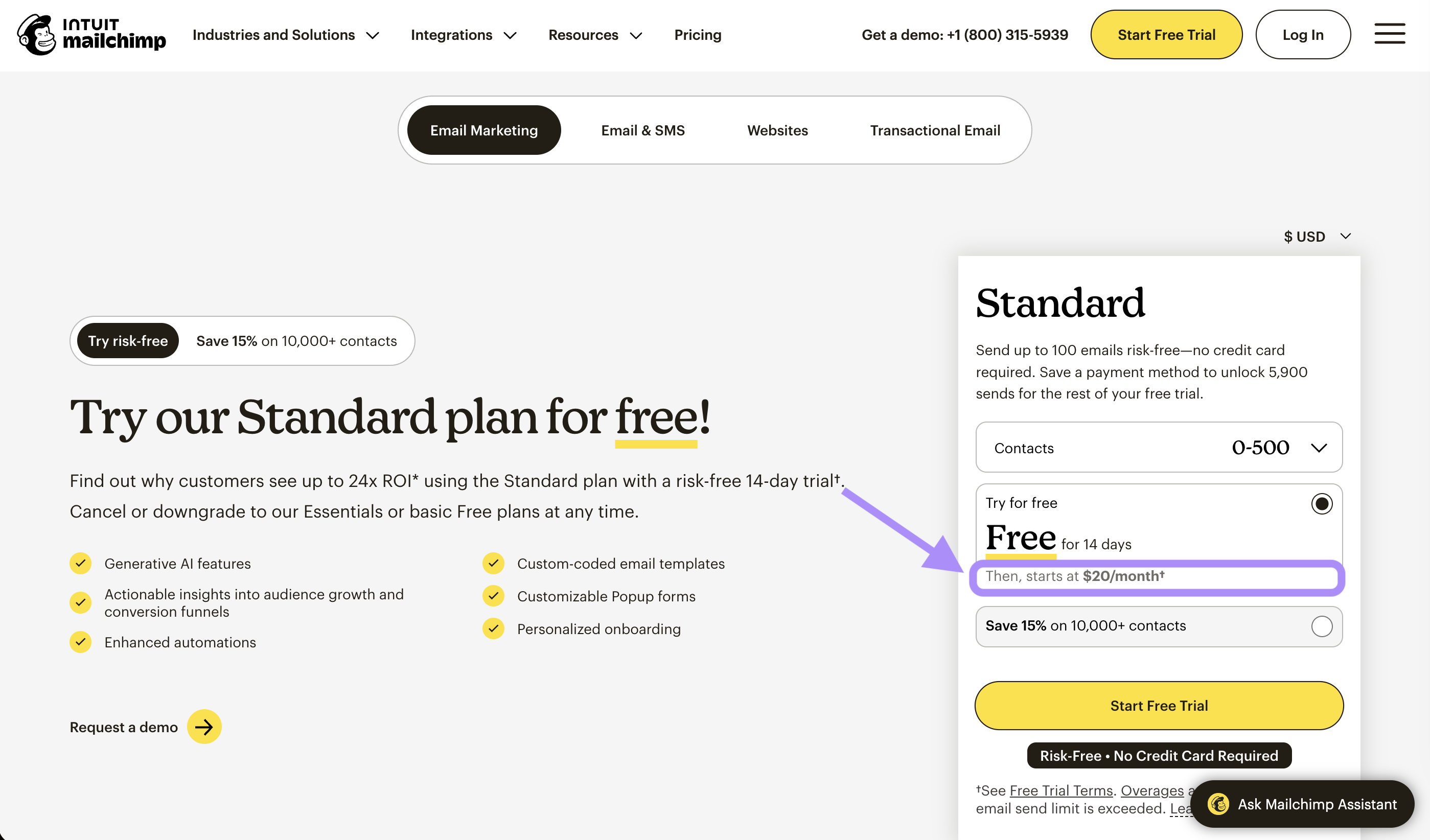
If you're just starting out, under 500 contacts, sending a simple monthly newsletter, not touching automation, Mailchimp's free plan is genuinely hard to beat. There's no credit card required, no trial expiry. You can build a signup form, send a welcome email and get comfortable with email marketing without spending anything.
The drag-and-drop editor is clean. The brand recognition means integrations are everywhere. For a solo operator sending a simple newsletter, it works.
Stay on Mailchimp if you're a true beginner who just needs email basics, you're not planning to grow your list significantly and automation is not part of your strategy.
But if any of the signs below sound familiar, keep reading.
4 Signs You've Outgrown Mailchimp
1. Your bill jumped when your list grew

Mailchimp charges based on the number of subscribers in your account. That sounds reasonable until you start growing. A SaaS founder I know watched his monthly invoice go from $100 to $500 in a single month. Not because he changed what he was doing, but because his user base grew. He was sending the exact same emails as before.
The math is punishing at scale. If a contact sits on three of your lists, Mailchimp counts and charges them three times. ActiveCampaign charges once per contact, regardless of how many lists or segments they appear in. For businesses with overlapping audiences, that difference compounds fast.
2. Automation keeps hitting a wall
Mailchimp's Customer Journeys work for linear sequences: welcome email, follow-up, done. The moment you need conditional branching (if someone clicked this link but not that one, wait three days, send a different email based on their behavior), you're either locked out entirely or pushed to a much higher tier.
I worked with a mid-sized e-commerce company with around 30,000 contacts selling home goods. They'd hit the wall with Mailchimp's automation. The logic they needed simply wasn't there at a price that made sense. They weren't doing anything outlandish. They just needed email to behave like a proper marketing system rather than a broadcast tool.
3. The interface stopped feeling simple
This one is personal. I remember when Mailchimp was the platform you recommended to people who were intimidated by tech. That's not how I'd describe it now. The navigation has grown into something genuinely complex: landing pages buried in menus, automation and forms that feel disconnected, options multiplying in every direction.
What was once its biggest strength, simplicity, has quietly eroded.
Side-by-Side: What Actually Matters When Switching
4. Your deliverability isn't where it should be
Most Mailchimp users never think about deliverability until they notice their open rates declining. According to EmailTooltester's independent testing, ActiveCampaign ranks #1 at 93.4% deliverability. Mailchimp sits at 92.6%. That gap translates to roughly 80 more emails landing in the inbox per 10,000 sends. It adds up across every campaign you run.
Where ActiveCampaign Pulls Ahead
Enterprise-grade automation without enterprise bloat or costs
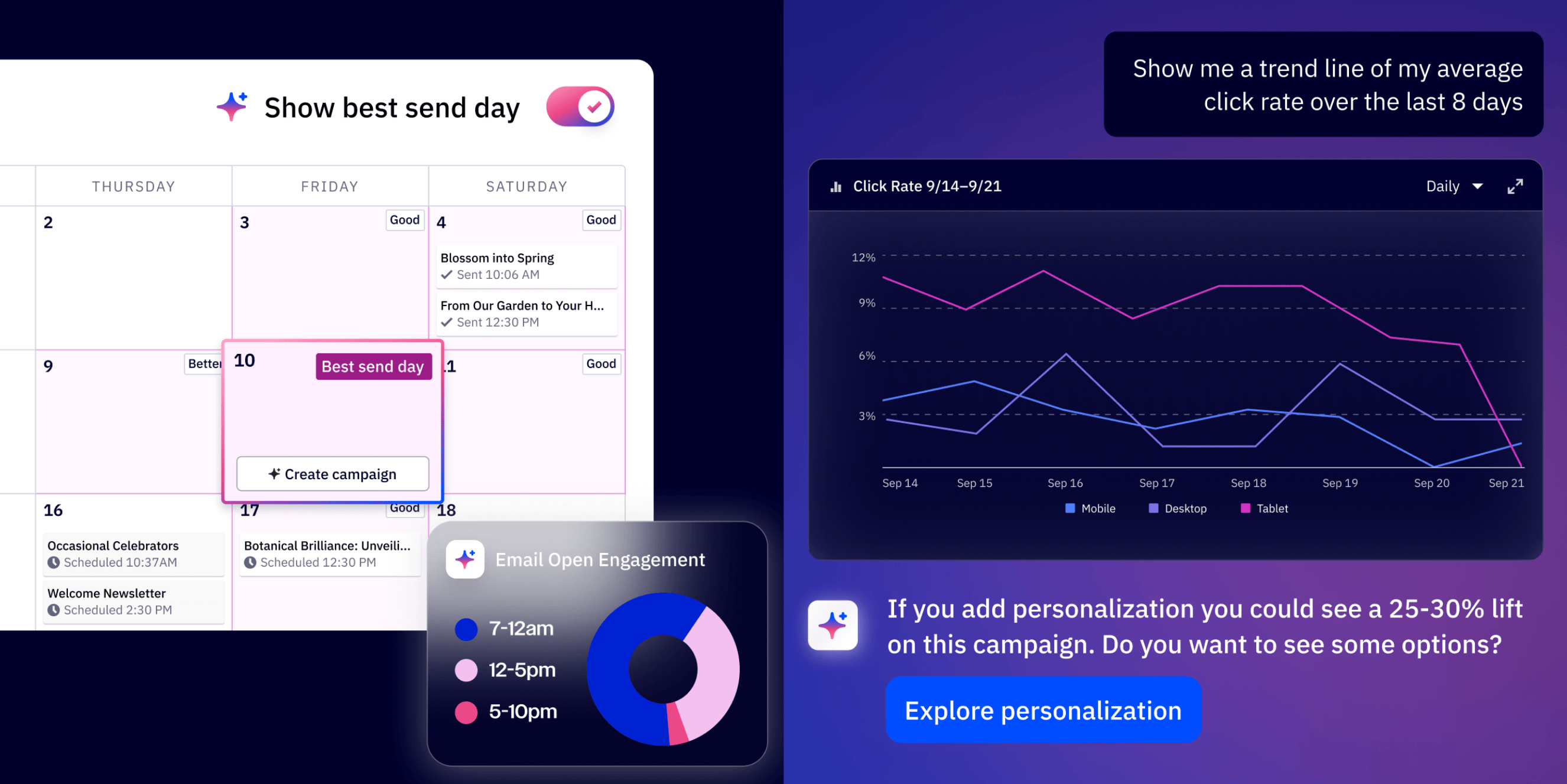
ActiveCampaign's visual automation builder is a different category of tool. You're not limited to linear sequences. You can build multi-branch workflows based on behavior, purchase history, page visits and email engagement. The 900+ pre-built automation templates mean you're not starting from scratch every time. These are available on the Starter plan at $15 a month. Mailchimp's comparable Standard plan starts at $20 and gates the advanced journey features behind higher tiers.
AI that works ahead of the problem
Most platforms show you what went wrong after the fact. ActiveCampaign's Active Intelligence works differently. It flags problems before they hit. If your revenue goals start falling behind, it can automatically trigger new segments, personalized campaigns and optimized send times to course-correct before results are impacted. You're not reading a dashboard report on a campaign that already underperformed. You're acting on predictive signals in real time.
The AI Campaign Builder takes it further. Describe what you want in plain language, "increase repeat purchases," and it builds the full campaign for you, including content, segmentation and send timing. In Mailchimp, you'd build every piece of that manually.
Pricing that doesn't punish growth
Here's a straightforward comparison at different list sizes:
At smaller list sizes Mailchimp is slightly cheaper. But that changes once you factor in duplicate contact billing and it shifts decisively once you need automation features gated behind Mailchimp's Standard or Premium tiers. One client I worked with was paying €700 a month on Mailchimp. The features they were actually using didn't justify it.
Side-by-Side: What Actually Matters When Switching
What the Numbers Say
UN|HUSHED, a nonprofit, switched from Mailchimp to ActiveCampaign and saw a 238% increase in open rates. Their Director of Operations put it plainly: deliverability rates with Mailchimp were poor and ActiveCampaign's inbox placement was noticeably better.
Palmetto Fortis went from 22% open rates on Mailchimp to 52% after switching, alongside 20% year-on-year growth. Their full story is here.
More than 600 businesses switch from Mailchimp to ActiveCampaign every month. That's not a marketing claim. It's tracked migration data.
The Verdict
Stay on Mailchimp if: You're just starting out, your list is under 1,000 contacts, you only need simple campaigns and you're not planning to build complex automation any time soon. It's a solid beginner platform.
Switch to ActiveCampaign if: Your list is growing and your bill is growing faster than expected. You need automation that branches and responds to behavior. You're running multi-channel campaigns. You want AI that helps you build and optimize, not just report. And you're tired of paying for contacts twice. You want a platform with a built-in CRM to manage contacts and deals in one place. And you're tired of paying for contacts twice.
ActiveCampaign offers a 14-day free trial. No credit card required. If you've hit the wall with Mailchimp, it's worth an afternoon to test the automation builder and see what you've been working around.
More from
Tools and Apps
category