.svg)


Most coaching clients I work with start in the same place: Calendly for booking, Stripe for payments, a Google Doc for session notes, and their inbox as a de facto CRM. It works until it doesn't. Usually around the point where a lead goes cold because nobody followed up, or a client's notes are somewhere in a folder nobody can find, or invoicing takes two hours every month that should take ten minutes.
One client summed it up better than I could. She told me she was spending more time jumping between tools, chasing invoices, sending manual follow-up emails, and updating spreadsheets than she was actually coaching. She switched to ActiveCampaign and connected it with her scheduling tool, and within a month the client communication side of her business was running on its own. That freed up roughly half a day a week she was previously losing to admin.
The question I get most often isn't "which CRM should I use." It's "how do I stop running my coaching business from five different tabs."
That's what this article is actually about.
What Coaches Actually Struggle With
The admin side of a coaching business is deceptively heavy. Between discovery calls, onboarding, session scheduling, progress tracking, invoicing, and following up with leads, the operational layer can easily consume more time than the coaching itself.
The coaches I've worked with tend to hit one of two walls. The first is fragmentation: tools that don't talk to each other, client data scattered across platforms, and a constant low-level anxiety that something is falling through the cracks. The second is over-engineering: buying a powerful all-in-one platform, spending three weeks setting it up, and then barely using half the features because the learning curve killed the momentum.
The coaching software market has responded by producing two distinct categories of tools. Purpose-built coaching platforms that handle the full client journey but don't do much beyond it. And general CRMs with strong automation that require more setup but scale further. Neither is universally better. The right choice depends entirely on where you are in your business and what's actually costing you time right now.
How I Think About Coaching Software
Before recommending anything, I ask three questions.
How many active clients do you have? Under 20, you probably don't need a full CRM. You need clean scheduling, easy invoicing, and somewhere to keep session notes. Over 20, the automation and pipeline features of a proper CRM start earning their keep.
Are you growing or maintaining? Coaches in growth mode need lead capture, email sequences, and follow-up automation. Coaches with a full roster and no growth ambitions need something that reduces friction, not adds features.
What's breaking right now? Start there. If scheduling is the problem, fix scheduling. If invoicing is chaotic, fix invoicing. Don't buy a platform that solves ten things when one thing is actually on fire.
The 6 Best Coaching Software Tools in 2026
1. Paperbell
Best for: Solo coaches who want zero admin overhead and a full client experience in one place
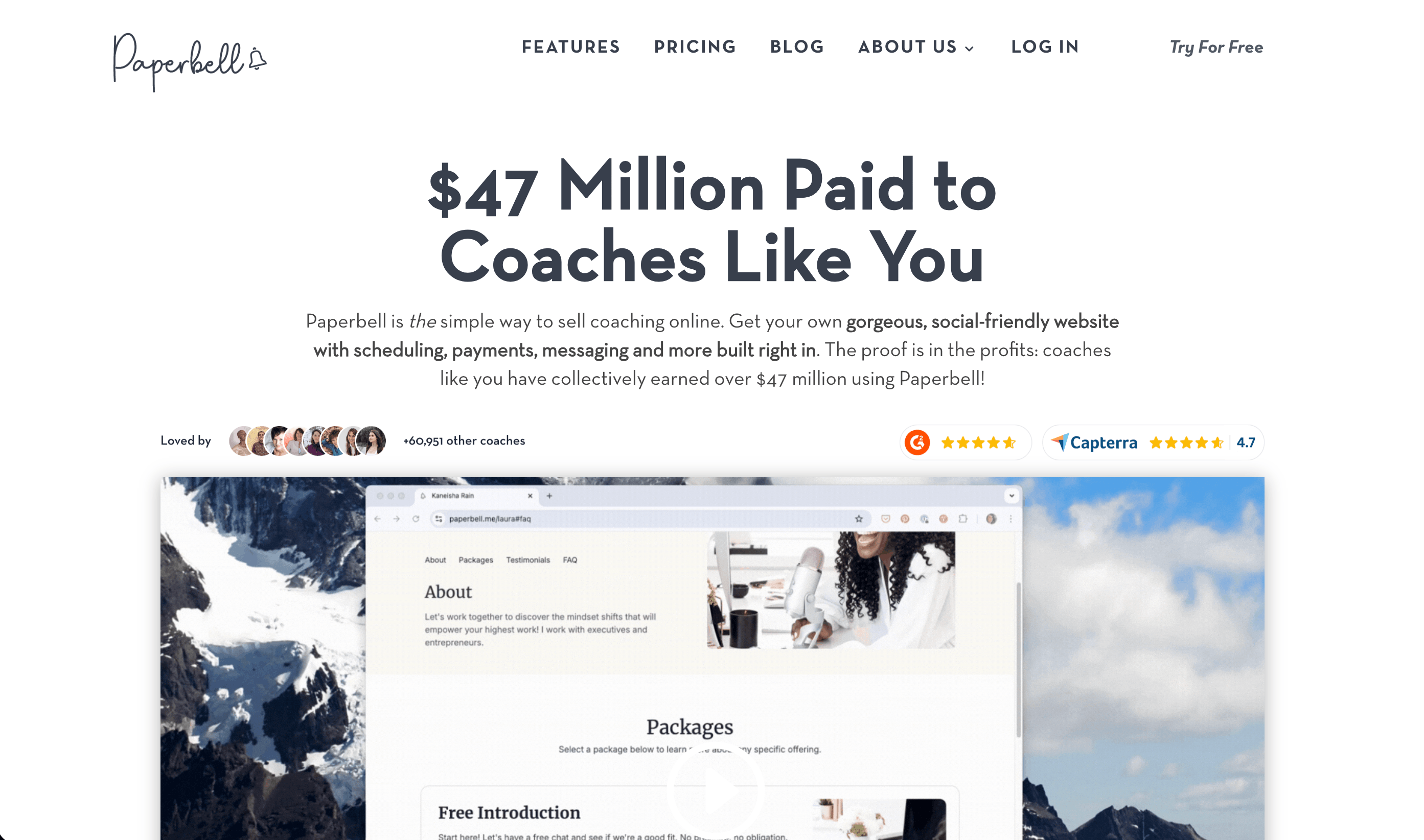
Starting at $47.50/month. Free trial available.
Most of my coaching clients who try Paperbell stay on Paperbell. That's a meaningful data point. Of the coaching clients I've helped evaluate and switch platforms, 9 out of 12 ended up on Paperbell. That number has stayed consistent enough that it's now my default starting recommendation for any solo coach who asks.
It handles scheduling, packages, contracts, payments, intake forms, and a client portal all in one place, and it does all of those things without requiring you to become a software person to set it up.
The client experience is genuinely good. Clients book, pay, and access their materials through a single branded portal. From your side, you can see exactly where each client is in their package, when sessions are running out, and what's coming up. It removes the back-and-forth that eats coaching hours.
Where it falls short is lead generation and marketing. Paperbell is built for managing existing clients, not acquiring new ones. There are no email sequences, no lead nurturing, no pipeline beyond what's already booked. If your practice is full and you're focused on delivering great coaching rather than growing, that's fine. If you're actively trying to bring in new clients, you'll need a separate tool alongside it.
Best suited to: life coaches, health coaches, career coaches running a solo practice with a steady or full client roster.
2. ActiveCampaign
Best for: Coaches who want serious automation without paying enterprise prices
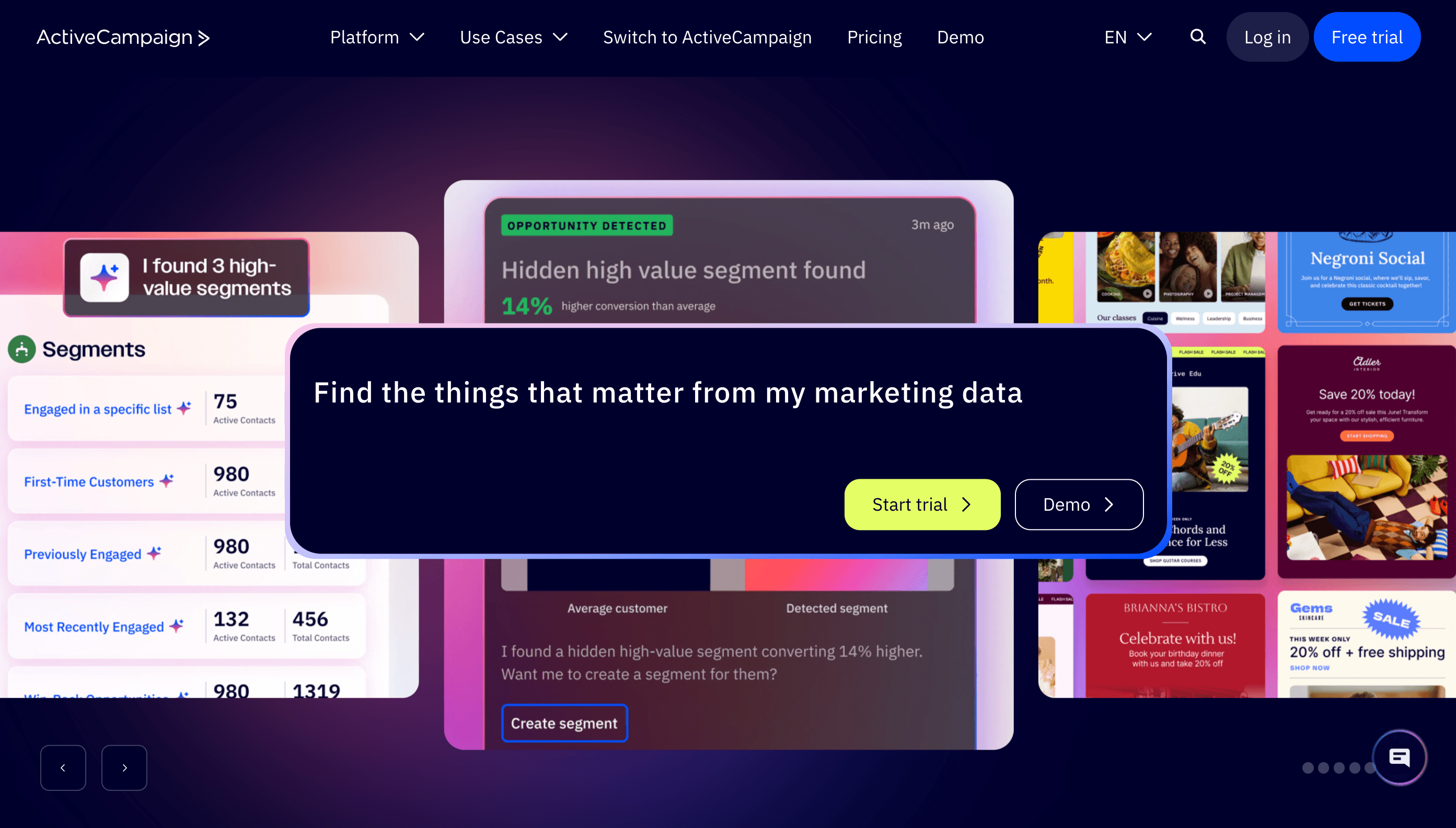
Starting at $15/month. 14-day free trial.
ActiveCampaign sits in a different category from Paperbell. It's not a coaching-specific platform. It's a CRM and marketing automation tool that happens to work very well for coaches who are actively building their client base.
The automation builder is the main reason to consider it. You can set up sequences that nurture leads from a discovery call opt-in through to a booked package, send follow-ups when someone goes quiet, tag clients based on their programme stage, and trigger actions based on behavior. For coaches running group programs, launches, or any kind of content-driven lead generation, that kind of automation is what keeps the pipeline moving without manual effort.
The learning curve is real. ActiveCampaign rewards coaches who are willing to invest time in setting it up properly. Used well, it genuinely replaces the scattered approach. Used poorly, it becomes another tab you're avoiding.
Best suited to: coaches in growth mode, those running group programs or launches, and coaches who are already using email marketing and want their CRM to connect to it.
3. folk
Best for: Coaches who want a clean, lightweight CRM without the complexity of a full platform
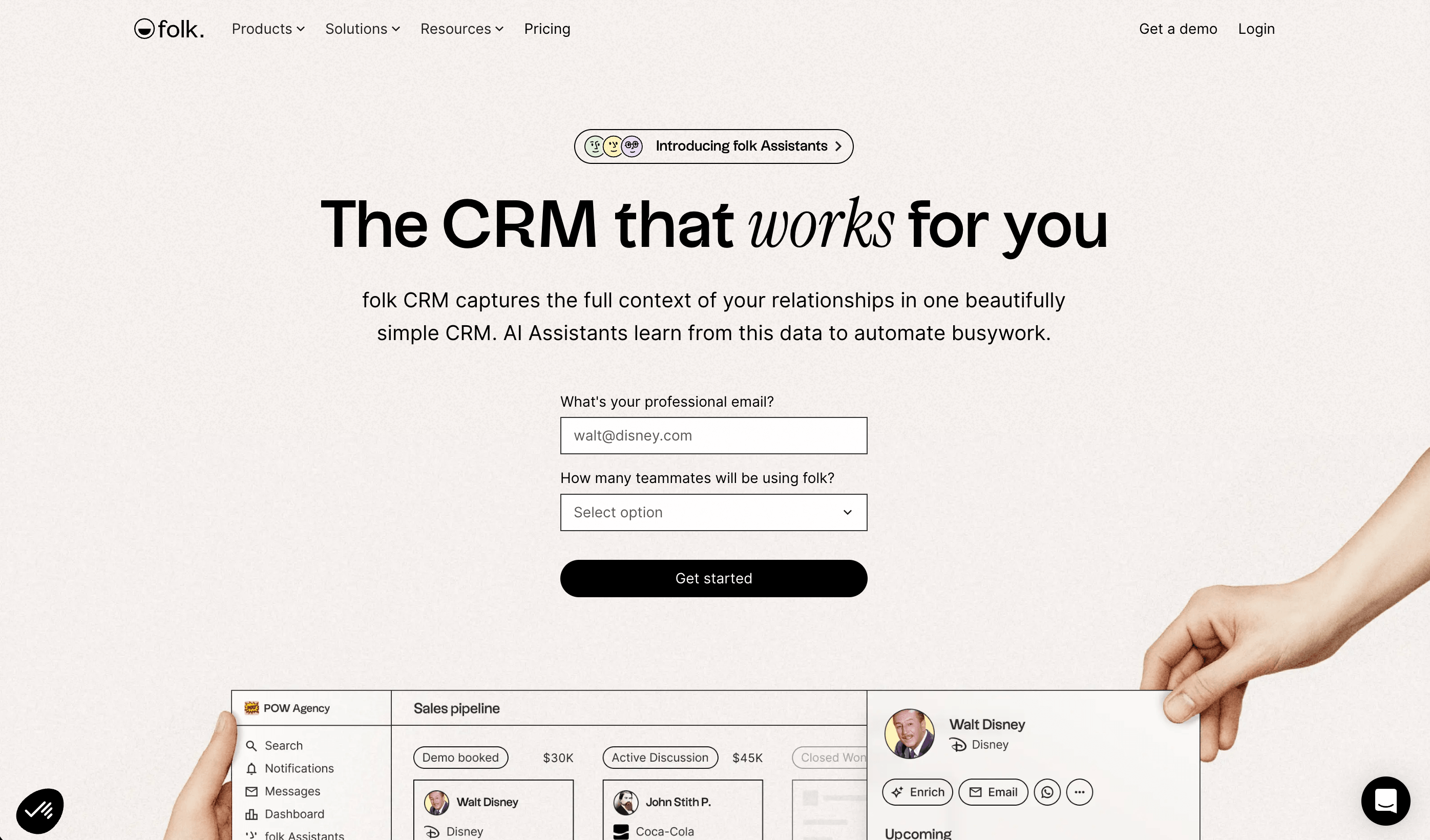
Starting at $20/month. Free plan available.
folk is newer and less talked about in coaching circles, which is partly why it's worth including. It's a CRM built around simplicity. You can manage contacts, track conversations, add notes, set reminders, and see where each lead or client sits in your pipeline without navigating a platform that feels like it was built for a sales team of fifty.
The AI features are genuinely useful rather than decorative. folk can draft personalized outreach messages based on contact context, which is practical for coaches who do any kind of direct outreach to potential clients. The interface is clean enough that most coaches can be up and running within an afternoon rather than a week.
It won't replace a full coaching platform. There's no scheduling, no contract management, no client portal. But for coaches who already have those pieces in place and just need a proper CRM to sit underneath everything, folk fills that gap well without demanding a large budget or significant setup time.
Best suited to: coaches who are organised in their delivery but chaotic in their lead management, and those who want a CRM that actually gets used rather than avoided.
4. Dubsado
Best for: Coaches who want deep customisation and are willing to invest time in setup
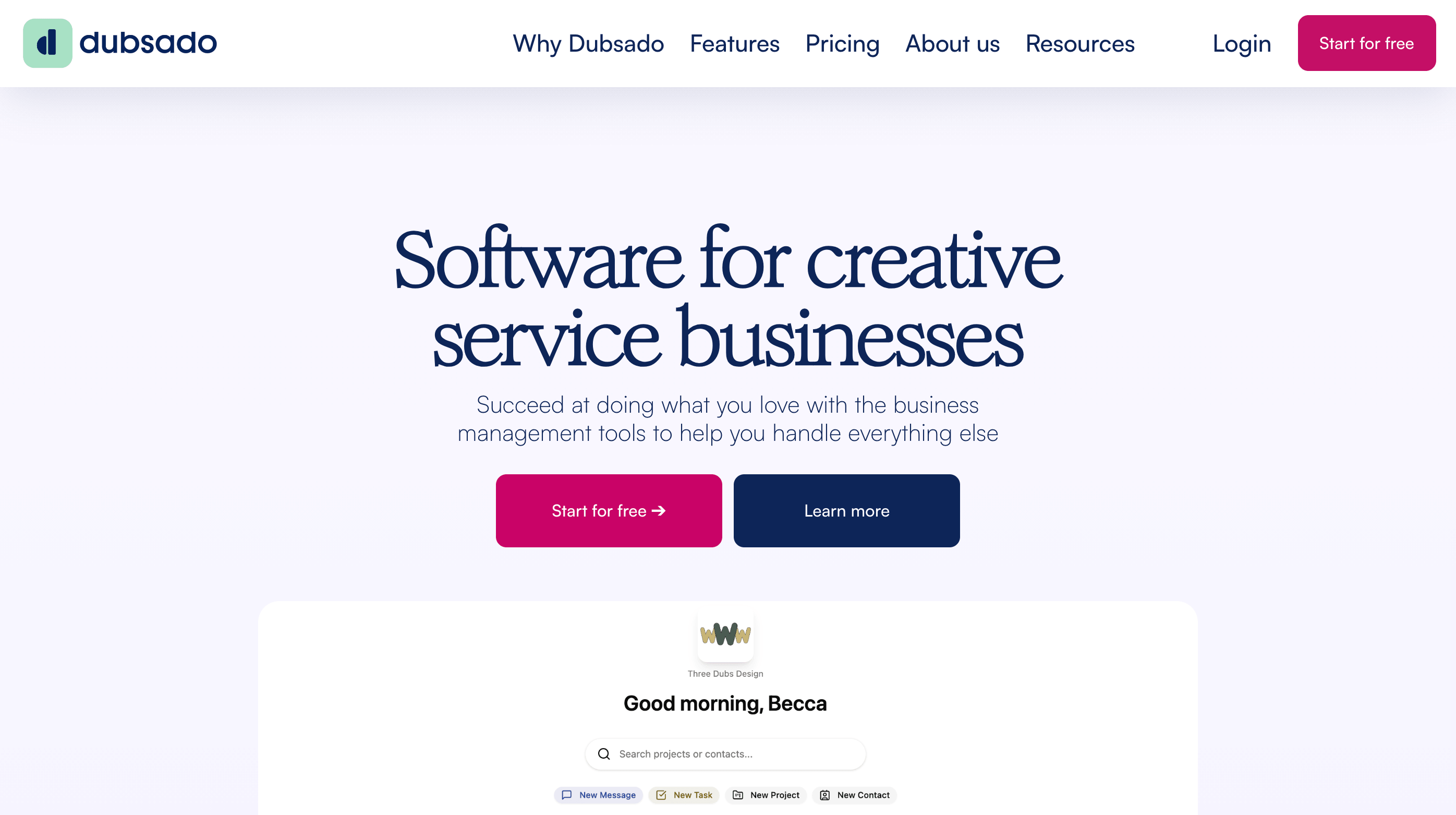
Starting at $20/month. Free plan for first 3 clients.
Dubsado is what coaches tend to land on when they've outgrown simpler tools and want something they can shape entirely around their own workflow. The customization is extensive: you can build your own onboarding sequences, create branded client portals, set up automated workflows that trigger based on project stage, and design forms and contracts that match your brand precisely.
The tradeoff is setup time. Dubsado rewards coaches who treat the initial configuration as an investment. Those who do often find it becomes the backbone of their business. Those who don't often find themselves with a half-configured system that creates more confusion than it solves.
It handles scheduling, invoicing, contracts, questionnaires, and client communication in one place. The reporting features give you a clearer view of your revenue and pipeline than most coaching-specific tools. For coaches running more complex businesses with multiple program types or a small team, that visibility is useful.
Best suited to: coaches with multiple service offerings, small team operations, or those who want complete control over their client experience and are prepared to spend time building it.
5. HoneyBook
Best for: Coaches whose brand presentation matters as much as their operations
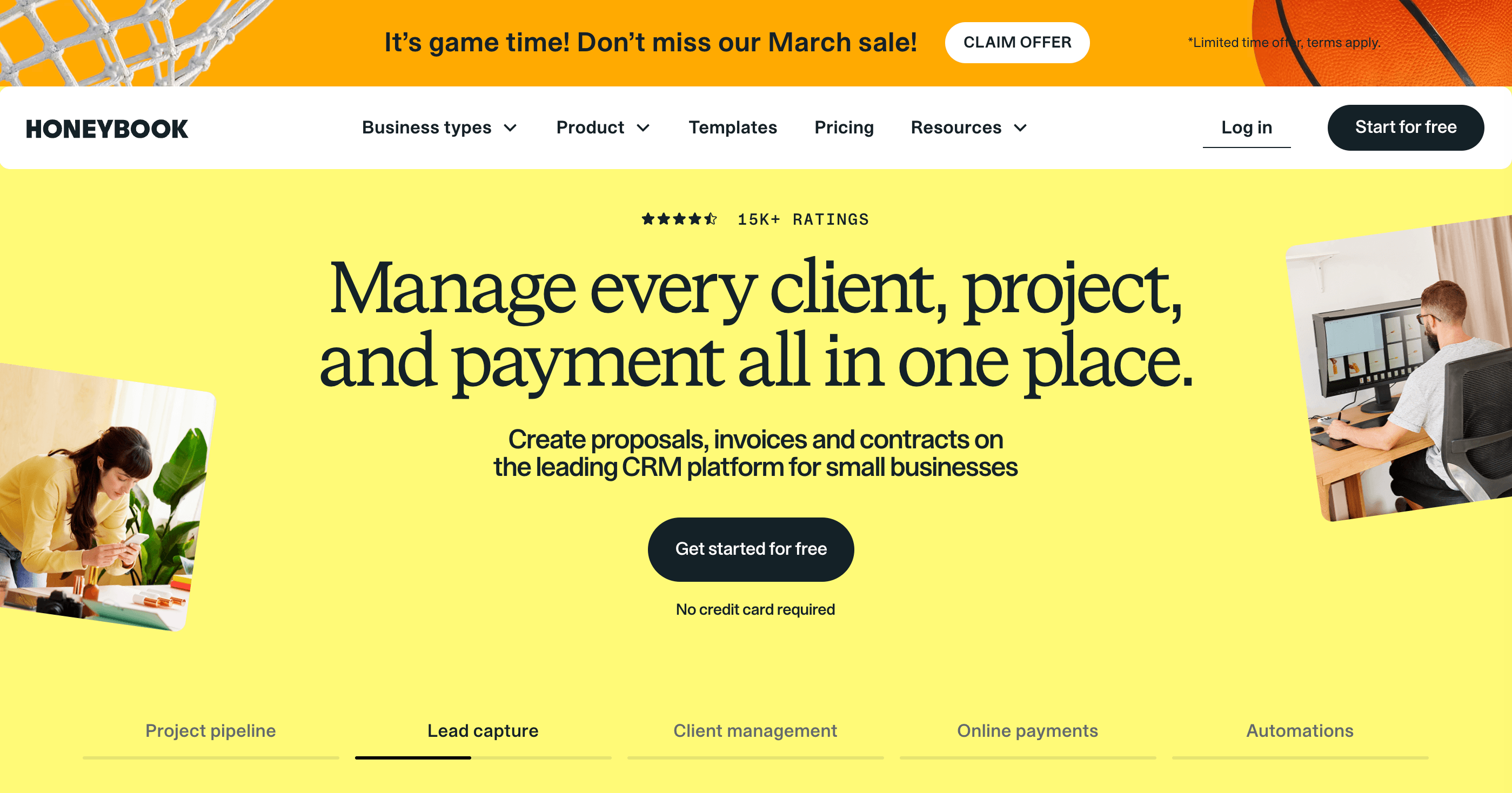
Availability note: HoneyBook is only available in the US and Canada. If you're based in Europe or anywhere else outside North America, this one isn't an option for you, try other tools in this list instead.
Starting at $16/month. 7-day free trial.
HoneyBook came up frequently with clients who were looking to switch away from it, which is worth being honest about. The most common complaint was the scheduling feature, which feels less intuitive than standalone tools like Calendly and creates friction in the booking process.
That said, HoneyBook does some things genuinely well. The proposal and contract experience is polished in a way that few other tools match. Clients receive an interactive brochure-style document that combines your service overview, contract, and payment in a single flow. For coaches whose first impression matters and who work with clients where the onboarding experience sets the tone for the relationship, that level of presentation is worth something.
It's also more affordable than most all-in-one alternatives, which makes it a reasonable starting point for coaches who are earlier in their business and want something that covers the basics without a large monthly commitment.
Best suited to: coaches who prioritize how they present to clients and need solid contract and invoicing tools, but are less reliant on advanced scheduling or automation.
6. HubSpot
Best for: Coaches planning to scale beyond solo practice
Free plan available. Paid plans from $15/month per user.
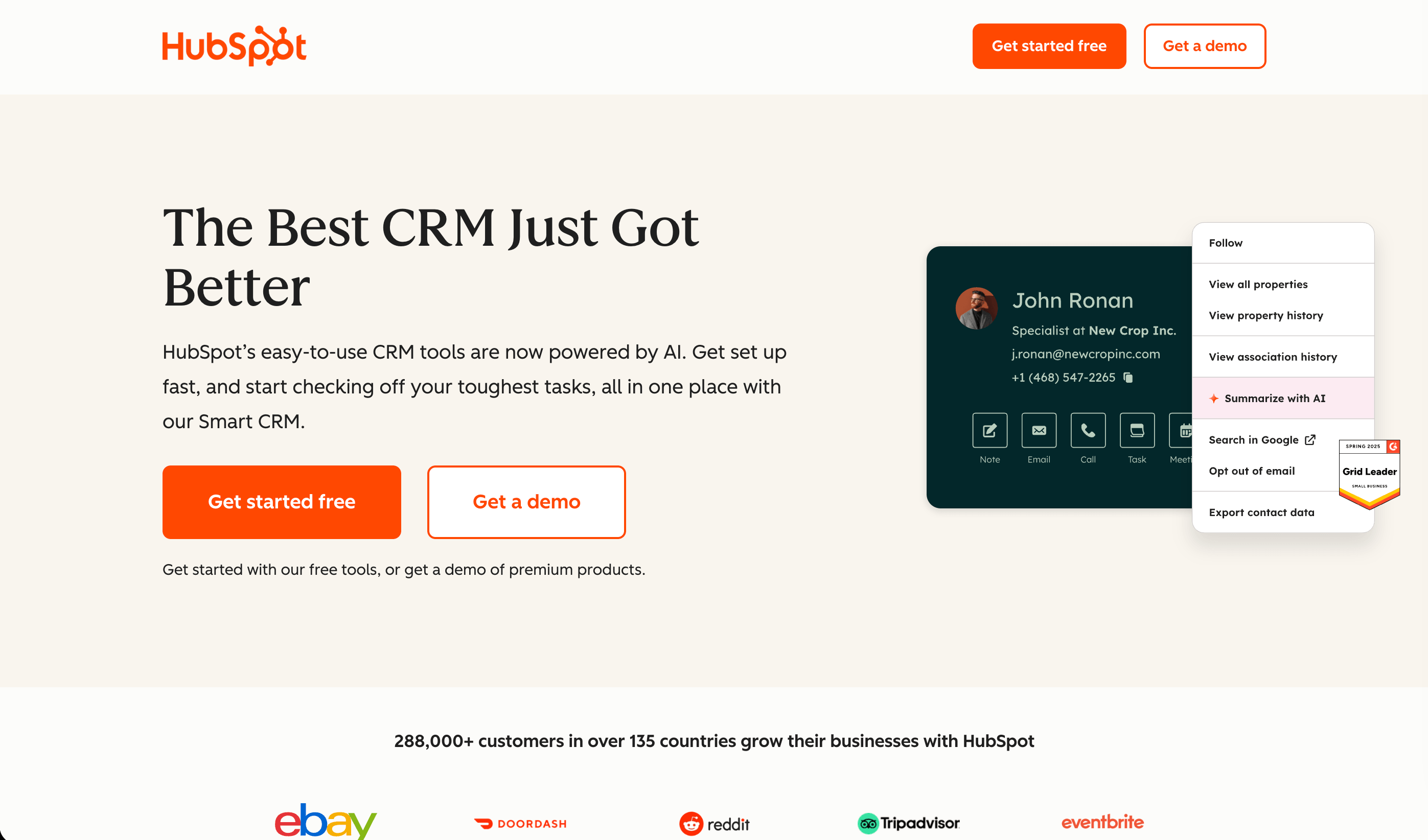
HubSpot is the most powerful tool on this list and the one I'd recommend least often to a solo coach just starting out. Not because it's bad, it isn't, but because the gap between what it offers and what most coaches need creates more friction than value.
Where HubSpot earns its place is for coaches who are building something larger: a team of coaches, a content-driven lead generation machine, or a business that needs proper sales pipeline management alongside its CRM. The free plan is genuinely functional and a reasonable place to start if budget is a constraint. The marketing hub, when you move into paid tiers, handles email, landing pages, forms, and analytics in a way that scales with the business rather than requiring a platform switch later.
A client I worked with moved to HubSpot after their coaching business expanded to four coaches and they needed visibility across the whole team's pipeline. For that use case, it was the right call. For the solo coach managing 15 clients, it was overkill.
Best suited to: coaches building a team or organization, those running high-volume inbound content strategies, and businesses that have outgrown simpler tools and need enterprise-level pipeline management.
3 Things I Tell Every Coaching Client Before They Buy Software
Start with the problem, not the platform. I've watched coaches spend a month evaluating software when their actual problem was that they weren't following up with leads consistently. A calendar reminder would have solved it. Know what's actually broken before you buy something to fix it.
The tool you use is better than the tool you don't. A coach using Paperbell consistently will outperform a coach with a half-configured HubSpot account every time. Simplicity that gets used beats power that gets avoided. If a tool feels like admin, you'll find reasons not to open it.
Don't migrate when you're busy. Platform switches always take longer than expected and always happen at the worst time. If you're in the middle of a launch or at capacity with clients, wait. The cost of a distracted migration is higher than the cost of staying on a suboptimal tool for another two months.
One Surprising Thing I've Noticed
The coaches who are happiest with their software are rarely using the most sophisticated tool. They're using the simplest tool that handles their specific friction point. The ones who struggle most tend to have bought upward, choosing a platform based on where they want to be rather than where they are. Paperbell clients retain longer. Not because Paperbell is objectively better than HubSpot, but because a tool with less surface area creates less resistance to actually running the business.
Software doesn't build your coaching practice. You do. The tool just needs to stay out of the way.
Frequently Asked Questions About Coaching Software and CRM for Coaches
More from
Tools and Apps
category