.svg)


I once had a client paying $180 a month for an SEO tool. She was a solopreneur running a coaching business. She had signed up on the recommendation of someone in a Facebook group, excited about all the features, and used exactly two of them. The keyword research tab, occasionally. And the dashboard, just to feel like she was doing something.
That is the most common SEO mistake small business owners make. Not ignoring SEO entirely. Paying for the wrong tool and then not understanding why it is not working.
I have spent over a decade working in digital marketing, using tools like Ahrefs and Semrush professionally across client accounts. But the tools I reach for when setting up a small business owner who is doing their own SEO for the first time look very different. The wrong tool does not just waste money. It wastes time, creates confusion, and makes people give up on SEO entirely.
Your SEO setup only works as hard as the website builder underneath it. Slow platforms, bloated code or poor mobile rendering will cap your rankings no matter how sharp your keyword strategy is. Keep in mind that site speed also affects SEO, so choose optimized hosting to improve performance.
This article is not for SEO professionals. It is for small business owners, solopreneurs and consultants who want their website to show up on Google without hiring an agency or becoming an SEO expert. You do not need to understand technical SEO to use these tools. You do not need a marketing team or tools that are designed for marketing teams. You need the right tool for where you are right now, and the discipline to use it consistently. Here are the tools worth considering in 2026, structured by what you actually need and when.
Quick comparison: best SEO software for small business in 2026
Start here: the 2 free tools every small business needs first
Before you spend a single dollar on SEO software, set these up. Most small business owners skip them and go straight to a paid tool. That is the wrong order.
1. Google Search Console

Price: Free | Level: Beginner
Google Search Console is the only tool that gives you direct, first-party data from Google about your own website. It tells you which keywords are bringing people to your site, which pages are ranking and where, what technical issues Google has found, and which pages have been indexed.
Most small business owners set it up and then never open it again. That is a mistake. The Performance report alone shows you exactly which keywords you are getting impressions for but not enough clicks. Those are the pages you should be updating first. No paid tool gives you this data more accurately because it comes directly from Google.
Set it up before anything else. Verify your domain, submit your sitemap, and check it at least once a month. It is free, it is essential, and it should be the starting point of any small business SEO effort.
2. Bing Webmaster Tools

Price: Free | Level: Beginner
Most people ignore Bing Webmaster Tools because they think Bing does not matter. In 2026 it matters more than it used to. ChatGPT's search function draws heavily from Bing's index. If you want your business to show up when someone asks ChatGPT a question related to what you do, being indexed properly on Bing is increasingly relevant.
Beyond that, Bing Webmaster Tools often surfaces technical SEO issues that Google Search Console misses or presents differently. The site audit tool is solid and completely free. Submit your sitemap here too. It takes ten minutes and costs nothing.
Once these two are set up, then consider a paid tool based on your next priority.
The best affordable SEO tools for small business
3. Mangools: Best budget all-in-one SEO software for small business

Price: From $29/month (annual) | Free trial: 10 days, no credit card | Level: Beginner
If you want one paid tool that covers the core SEO tasks a small business actually needs, Mangools is the most consistently recommended option at this price point in 2026. It combines five tools in a single, clean interface: keyword research (KWFinder), rank tracking (SERPWatcher), SERP analysis (SERPChecker), backlink analysis (LinkMiner), and domain metrics (SiteProfiler).
What makes it stand out for non-SEO-experts is the interface. Tools like Semrush and Ahrefs can feel overwhelming when you open them for the first time. Mangools feels like it was designed for someone who has a business to run and wants to spend 20 minutes on SEO, not 20 hours learning a platform. The keyword difficulty scoring is clear, the rank tracker updates daily, and the whole dashboard is approachable without a learning curve.
Users consistently say the same things across G2, Capterra and Trustpilot: the value for money is strong, the interface is one of the most intuitive in the category, and the support team responds quickly. One long-term user described it as covering 90% of day-to-day SEO needs without the complexity of larger platforms. Another noted they had been using it for ten years across multiple projects and had never had an issue that was not quickly resolved.
The main limitation to know about: Mangools does not have a built-in site audit tool for technical SEO. If you have a large or complex website with technical issues, you will need to supplement with a free tool like Screaming Frog (free for up to 500 URLs) or Bing Webmaster Tools. For most small business with straightforward websites, this is not a problem in practice.
Who it is for: solopreneurs, bloggers, small business owners doing their own SEO, and anyone who wants a clean affordable tool that does not require an SEO background to use.
4. KeySearch: Best for the tightest budgets

Price: From $24/month | Level: Beginner to intermediate
KeySearch covers keyword research, competitor analysis, rank tracking, backlink analysis and YouTube keyword research in one platform. It uses the Moz Pro API which keeps the keyword difficulty scores reasonably accurate. It does not do everything Ahrefs or Semrush do, but it handles the tasks most small businesses actually need at a price that is genuinely hard to argue with.
The $24 Starter plan gives you 200 keyword searches per day and 80 tracked keywords, which is more than enough for a single small business website. It is not as polished as Mangools and the interface can feel a little dated, but the data holds up and the price is genuinely hard to argue with.
KeySearch has been around since 2015 and has a small but loyal following, particularly among bloggers and content-focused solopreneurs. It is a solid choice if budget is the primary constraint and you are comfortable with a slightly less refined experience.
Who it is for: bloggers, solopreneurs and early-stage business where cost is the deciding factor.
Growing your SEO: tools for when the basics are working
5. SE Ranking: Best mid-tier all-in-one for growing businesse

Price: From $65/month (Essential plan, monthly) | Free trial: 14 days | Level: Beginner to intermediate
SE Ranking used to be the obvious budget recommendation. Pricing has increased significantly since its early days, and the entry-level plan now sits closer to the mid-tier. That said, it still costs considerably less than Semrush or Ahrefs and offers a genuinely comprehensive feature set: rank tracking with daily updates, site audit, keyword research, competitor analysis, backlink monitoring and an AI content writer.
Where SE Ranking earns its place on this list is in the rank tracking and reporting features. Daily rank updates across multiple locations and devices, clean visualizations, and solid client-facing reports make it particularly useful for small businesses that are actively tracking progress or working with a part-time marketing consultant. The G2 rating sits at 4.8 out of 5 from over 1,300 reviews, which is consistently strong.
One honest note: SE Ranking is better suited to business managing multiple pages and campaigns than to someone who just wants to do occasional keyword research. If you only need to check in on your SEO a few times a month, the cost may not be justified. But if you are actively building out content and want daily visibility into how it is performing, the pricing is more defensible than it first appears.
Who it is for: small businesses that are actively growing their SEO, tracking rankings across multiple keywords, and want more depth than budget tools offer without paying Semrush prices.
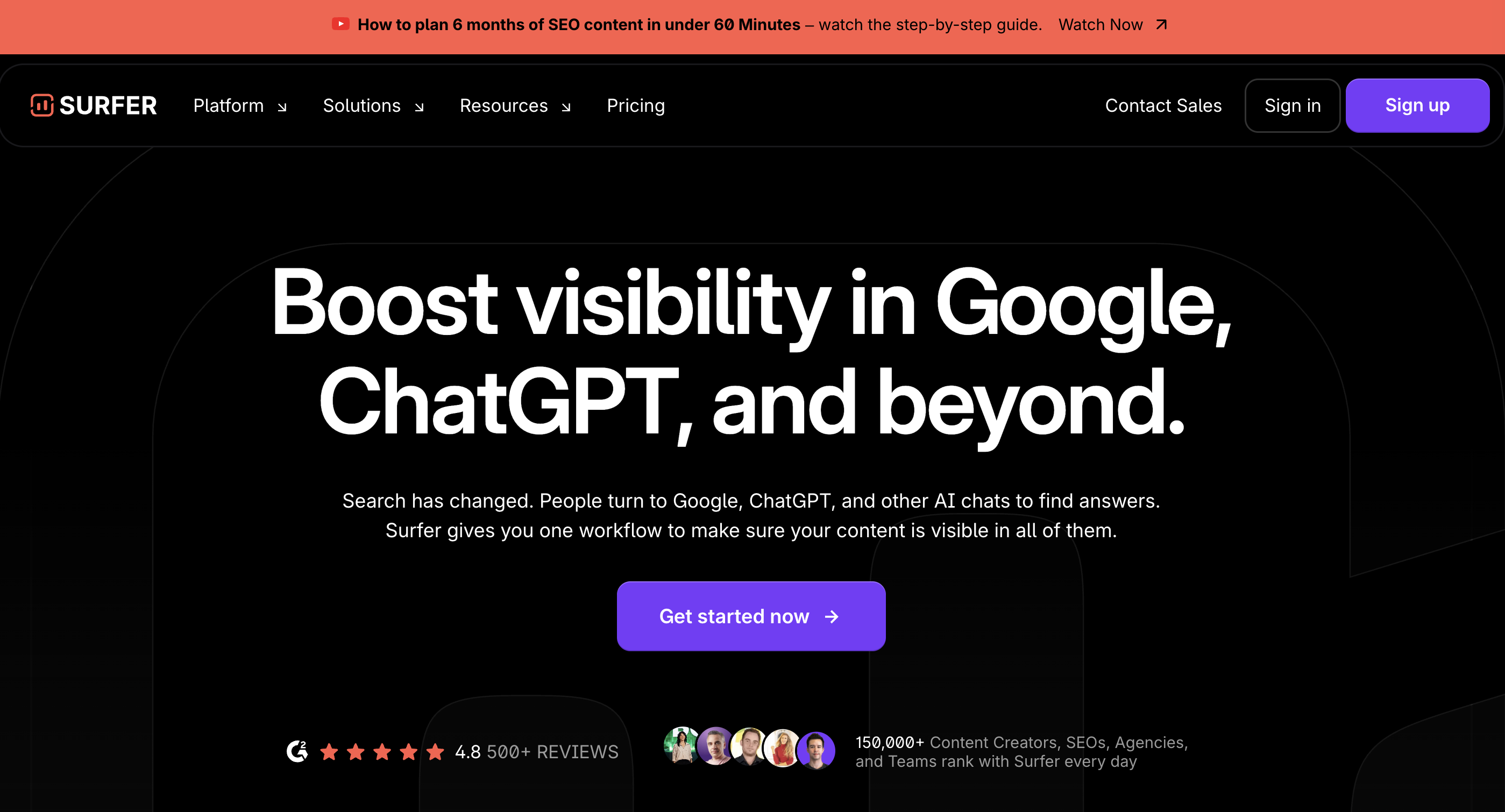
6. SurferSEO: Best for writing content that ranks
Price: From $99/month | Free trial: 7-day money-back guarantee | Level: Beginner to intermediate
SurferSEO does one thing and does it very well. When you are writing a piece of content for a target keyword, Surfer analyzes the top-ranking pages for that keyword and tells you what your article needs to match them: which terms to include, how long it should be, how many headings to use, and what questions to answer. It gives you a real-time content score as you write.
This is the tool I would recommend to a small business owner who is serious about creating content that ranks and wants practical, data-driven guidance rather than having to figure out on their own why a competitor is outranking them. The Google Docs integration means you can use it directly inside your writing environment without switching tabs constantly.
The trade-off is that SurferSEO is not an all-in-one tool. It does not do keyword research at the level Ahrefs or Mangools does, and it has no rank tracking or backlink analysis. It is a content optimization tool, not a full SEO suite. Most small businesses that use it pair it with a separate keyword research tool or Google Search Console.
At $99/month it is also the most expensive tool aimed at beginners on this list. The price is justified if you are producing content regularly and want to maximize the chance that each article ranks. If you are only publishing once a month, the math may not add up.
Who it is for: small business owners and solopreneurs who publish content consistently and want a clear, practical guide to optimizing each piece before they hit publish.
When you are ready to go deeper
7. Ahrefs: Best for competitor research and backlink analysis

Price: $29/month (limited Starter), $108/month (Lite, full access) | Level: Intermediate
Ahrefs is one of the best and most advanced keyword tracking tools and I have used for over ten years and the one I reach for when I need to understand why a competitor is ranking above a client, where their links are coming from, or which keywords are driving their traffic. The backlink database is the largest in the industry. The keyword data is reliable. The Site Explorer is genuinely one of the most useful tools in SEO.
For small business owners doing their own SEO, Ahrefs is worth considering once you have the basics working and want to understand the competitive landscape more deeply. There is a hidden $29/month Starter plan that gives limited access and is worth testing before committing to a full plan. The full Lite plan at $108/month is the right entry point once you know you will use it regularly.
The honest answer on Ahrefs for small business: it is an intermediate tool. The data is excellent, but you need to know what questions to ask it. A small business owner who has never done keyword research will get more immediate value from Mangools than from Ahrefs. Once you understand the fundamentals and want to go deeper, Ahrefs is hard to beat.
Users on Reddit and G2 consistently rate it as one of the most accurate tools for competitive research. The main complaints are price and the fact that some traffic estimates diverge from first-party data, which is a limitation of any third-party tool. Neither is a dealbreaker.
Who it is for: small businesses that have their SEO foundations in place and want to understand their competitive landscape, find link building opportunities, or do serious keyword research.
8. Semrush: Best all-in-one SEO platform for managing everything in one place

Price: From $139.95/month | Free tier: Limited free searches | Level: Intermediate
Semrush is the most comprehensive SEO and marketing platform on this list. Keyword research, site audits, rank tracking, backlink analysis, content optimization, PPC research, social media monitoring, and competitor intelligence all in one dashboard. I have used it professionally for over seven years. It is powerful, well-maintained, and backed by a large team that consistently adds new features.
For a small business owner doing their own SEO, Semrush is overkill in most cases. The interface is wide, the learning curve is real, and the $139 entry price is hard to justify if you are only using three of the twenty available tools. The business owners who get genuine value from Semrush at this price point are those running multiple marketing channels alongside SEO, or those who want a single platform that replaces four or five separate tools.
If that describes you, Semrush earns its place. The data quality is strong, the AI features are improving, and the breadth of the platform means you are unlikely to outgrow it. For everyone else, starting with Mangools and Google Search Console and upgrading later is the smarter financial decision.
Who it is for: small business managing SEO alongside PPC, content marketing and social media, or those who want one platform for everything and are willing to invest time in learning it properly.
Best SEO Tracking Software for Small Business
Rank tracking, watching where your pages sit in Google for your target keywords over time, is a feature inside several tools here, not a separate purchase. If tracking is your main priority, three options are worth comparing directly.
SE Ranking has the strongest tracking setup on this list: daily rank updates across multiple locations and devices, plus clean client-facing reports, which matters if you're sharing progress with a business partner or a part-time marketing consultant. It's the right pick if you want to log in and see movement daily rather than checking in occasionally. Mangools' SERPWatcher covers the same core need at less than half the price, with daily updates and a simpler interface, though the reporting is less polished than SE Ranking's. Ahrefs also includes a rank tracker, but it's built for someone already comfortable interpreting competitive SEO data, not for tracking rankings as a standalone task.
For most small business owners checking rankings a few times a month rather than daily, Mangools covers the need without paying for SE Ranking's deeper reporting layer. Google Search Console shows you actual clicks and impressions for free, a different and in some ways more useful signal than rank position alone, so don't skip it even if you add a paid tracker.
Best AI-Powered SEO Tools for Small Business in 2026
AI features are showing up across SEO software fast, but not all of it is equally useful, and some of it is more marketing language than functionality. Here's what's actually worth paying attention to among the tools in this article.
SurferSEO's content scoring is the most genuinely useful AI feature on this list. It analyzes top-ranking pages in real time and tells you what your draft needs to compete, a meaningfully different and more actionable use of AI than a generic writing assistant. Semrush has been adding AI features across its platform, including AI-assisted content suggestions, and SE Ranking now includes an AI content writer as part of its suite, though neither is the primary reason to choose those tools.
Mangools, KeySearch and Ahrefs don't lean on AI as a selling point, they're built around traditional keyword and backlink data instead. That's not a weakness. If you're looking for an AI-branded tool, it's an easy trap to pay more for a shinier interface without materially better SEO data underneath it. Judge these tools on the accuracy of their core keyword and backlink data first, and treat AI features as a bonus, not the deciding factor.
Offline and Desktop SEO Tools (No Subscription Dashboard Required)
Not everyone wants another web dashboard and another monthly login. If you'd rather run a tool locally on your computer and only pay once, or nothing at all, your options narrow fast, but they exist.
Screaming Frog is the standard here. The free version crawls up to 500 URLs, which covers most small business websites, and finds broken links, missing meta descriptions, duplicate title tags and other technical issues that a keyword-focused tool like Mangools or KeySearch won't catch. It runs as installed desktop software on Windows, Mac or Linux, no subscription required unless you outgrow the free URL limit.
None of the other seven tools in this article are desktop software. They are all web-based platforms you log into through a browser. If a locally-installed tool is a hard requirement for you, plan on running Screaming Frog alongside one of the web-based tools above rather than expecting it to replace keyword research or rank tracking.
Looking for a WebCEO Alternative?
If you're searching for a WebCEO alternative, you're probably already running into one of two things: the pricing has crept up, or the interface feels dated compared to newer tools. Both are fair reasons to switch, and you don't lose functionality moving to any of the tools on this list.
Mangools is the closest match on interface simplicity: it covers keyword research, rank tracking, SERP analysis and backlink data in one clean dashboard at $29/month, without WebCEO's steeper learning curve. If you specifically valued WebCEO's site audit and multi-client reporting features, SE Ranking is the better replacement, since it covers audits, rank tracking and reporting in one place and is built for people who check in regularly rather than occasionally.
Neither switch requires relearning SEO from scratch. The core tasks, keyword research, tracking rankings, checking backlinks, work the same way across all of these platforms. What changes is the price and how much friction is involved in finding what you need.
Which SEO tool should you start with?

The answer depends almost entirely on what you are trying to do right now, not what you might need in a year.
If you have just launched your website or have never looked at your SEO data before, start with Google Search Console and Bing Webmaster Tools. Both free, both essential. Learn what keywords you are already getting impressions for before spending anything.
If you want one affordable paid tool that covers keyword research, rank tracking and competitor analysis without a steep learning curve, Mangools at $29/month is the most consistent recommendation for small business in 2026. KeySearch at $24/month is the right choice if budget is the deciding factor.
If you are writing content regularly and want practical guidance on how to optimize each piece before publishing, add SurferSEO. It is not a replacement for a keyword research tool, but paired with Google Search Console it covers a significant portion of what most small business content creators need.
If you are growing and want to go deeper on competitor research, backlink analysis and keyword strategy, Ahrefs is the most accurate tool for that job. Start with the $29 Starter plan to test it before committing to the full Lite plan.
Semrush and SE Ranking make sense once you are actively managing SEO as a regular part of your marketing, tracking multiple campaigns and need daily visibility into performance. They are not starting points. They are scaling tools.
The most expensive mistake is the one my client made: paying for a platform before understanding what you actually need from it. Start small. Learn the free tools first. Upgrade when you hit a real limit, not because a feature list looked impressive. Good SEO does not require an agency or a $500/month software stack. It requires the right tool, used consistently, by someone who understands what they are trying to achieve.
Frequently Asked Questions About SEO Software for Small Business
More from
Tools and Apps
category