.svg)


Most small businesses don't have a corporate travel manager. That means the founder, the ops person, or the person who got handed the task is researching flights, comparing prices, booking tickets, and somehow also doing their actual job at the same time.
If you're a solopreneur, freelancer or small business owner looking for cheap business flights without a dedicated travel department, three tools do the work of a full travel management stack without the complexity or the cost. I travel for work regularly and have used all three to coordinate everything from solo client trips to a 12-person team workation across multiple departure cities.
Across the last year of work trips, Skyscanner beat Google Flights on price for European routes more often than not. For transatlantic or long-haul routes, the gap was smaller and Google Flights won more consistently.
Here's what actually works and why.
Small Business Travel: Set a Simple Policy Before You Book Anything
Before touching any flight search tool, the single most impactful thing a small business can do is establish a basic travel policy. It doesn't need to be a formal document. It needs to answer three questions.
What's the budget per trip? A per-day or per-trip cap removes the guesswork from booking decisions and gives whoever is booking flights a clear mandate. Without it, every booking becomes a judgment call that takes longer than it should.
Who approves travel spend? For solo operators, this is automatic. For small teams, knowing whether the founder or a manager signs off prevents friction and duplicate bookings.
What's the booking window? According to Expedia's 2026 Air Hacks Report, the most affordable booking window for domestic flights is 15 to 30 days before departure, saving an average of $130 compared to booking six months out. For international travel, 31 to 45 days out saves an average of $190. Building a booking window into a simple travel policy means the team plans ahead rather than booking reactively at peak prices.
When to book and when to fly. This one surprises most people: Friday is now the cheapest day to both book and fly, according to Expedia's analysis of millions of bookings. The shift is driven by business travelers heading home earlier in the week, which opens up lower prices on Fridays for everyone else. Sunday and Monday are the most expensive days to book. For the actual travel day, Tuesday is the least busy day to fly and midweek flights (Monday through Wednesday) are on average 13% cheaper than weekend departures, according to Google's own data. For small business owners with any schedule flexibility, flying out on a Tuesday or Wednesday and booking on a Friday is the simplest combination for consistent savings.
What to avoid. Booking more than six months in advance consistently produces higher prices, not lower ones. The old wisdom about booking as early as possible no longer holds. Prices also spike in the three weeks before departure as business travelers fill remaining seats at any cost, so the window between 15 and 45 days out is genuinely the sweet spot for most business trips.
With those questions answered, flight search becomes a much faster process. The tools below do the rest.
The 3 Best Flight Search Tools for Small Business Travel
1. Google Flights
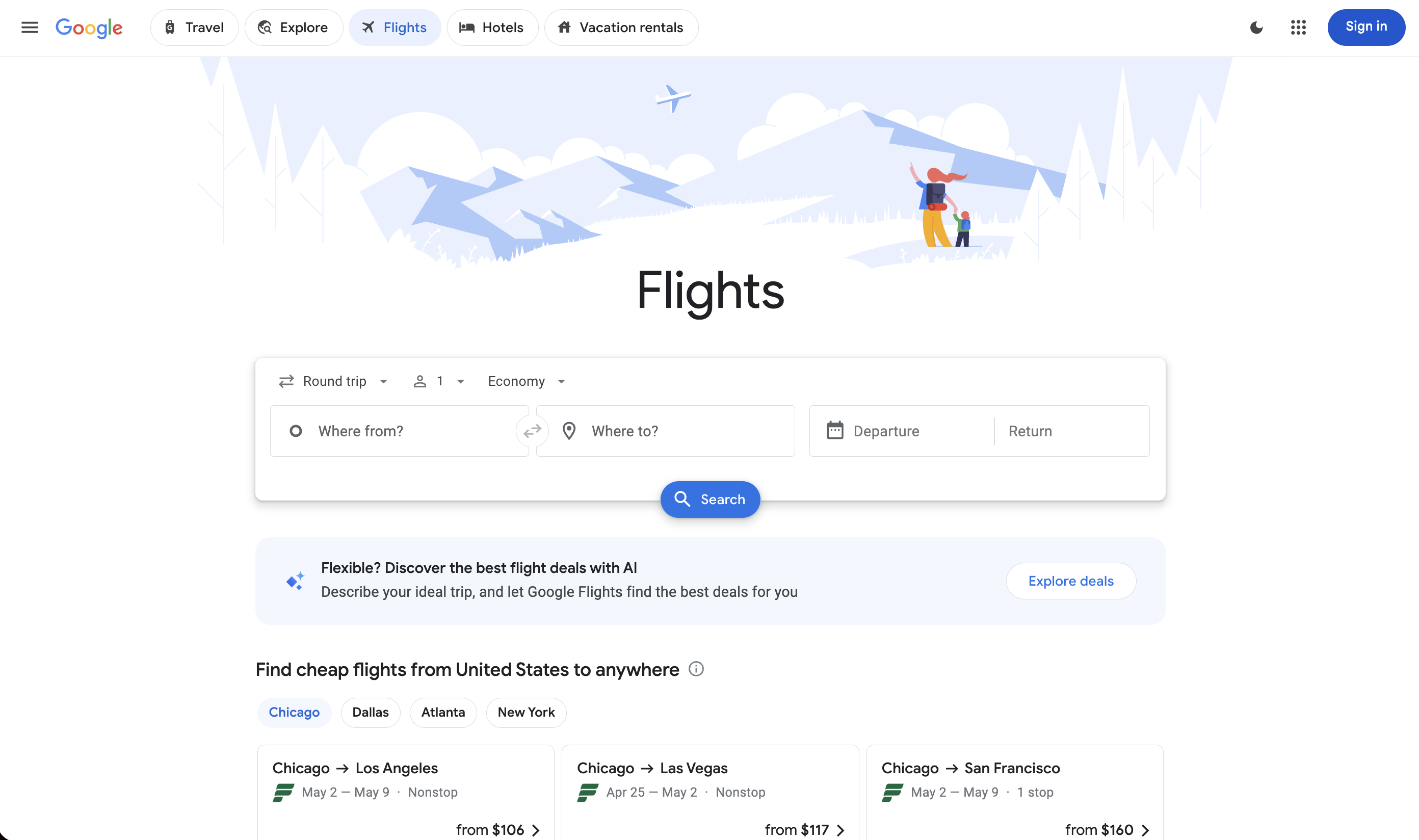
Start every search here.
Google Flights is where I begin every single flight search, for solo trips and group travel alike. The price calendar is the fastest way to identify the cheapest dates around a target travel window. If the business trip has any date flexibility, even a day either side, the calendar view immediately shows where the savings are without running multiple searches.
The price change notifications are particularly useful for small business travel planning. If you know a conference or client visit is coming up 3 months out but haven't committed to exact dates, setting a fare alert lets Google notify you when the price drops rather than monitoring manually. Finding cheap business flights this way consistently beats reactive last-minute booking.
For small businesses, the practical value is speed. You can benchmark a route, check date flexibility, and set an alert in under five minutes. That's a meaningful saving when whoever is managing travel is also managing everything else.
Best for: quick price benchmarking, flexible date searches, setting fare alerts for planned business trips, day-to-day travel planning.
Free to use.
2. Skyscanner
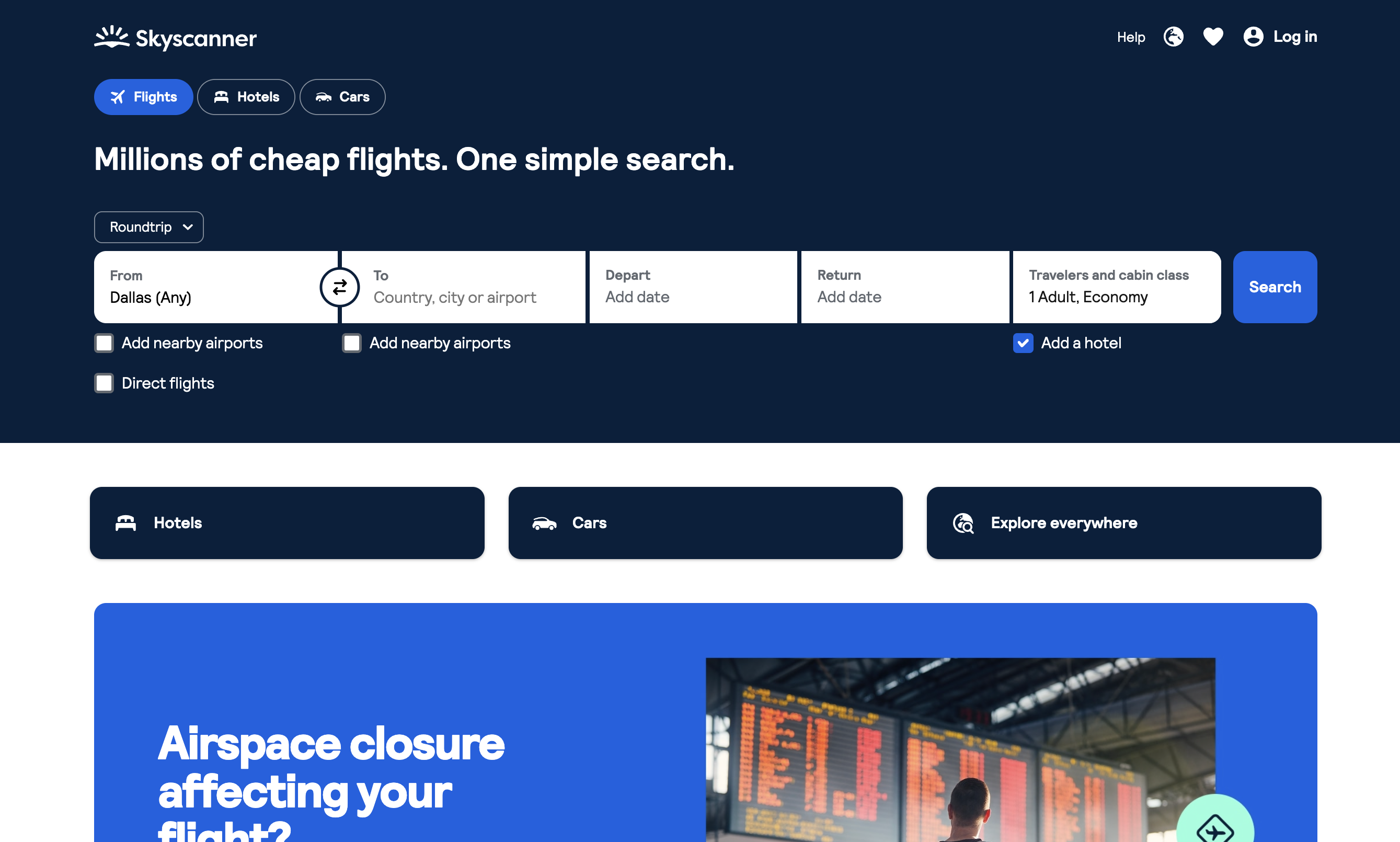
Cross-check here before you commit.
Skyscanner is my second stop after Google Flights. It consistently surfaces deals that don't always appear elsewhere, partly because of airline partnerships that sometimes produce lower prices through Skyscanner than through the airlines' own websites. I've booked business flights through Skyscanner that were cheaper than going directly to the airline, which is still surprising when it happens.
For small businesses operating across Europe, Skyscanner tends to have stronger coverage of budget carriers on regional routes than Google Flights. If your team travels between European cities regularly, checking both platforms takes an extra two minutes and occasionally saves a meaningful amount per ticket, which compounds quickly across multiple trips.
The "search everywhere" feature also has a practical business travel use case. If you're planning a team offsite or client retreat and haven't fixed the location yet, you can see the cheapest destinations to fly to from your city on a given date range and let price inform the decision.
Best for: finding deals that undercut direct airline pricing, European budget carrier routes, flexible destination searches for offsites and retreats.
Free to use.
3. Kiwi.com
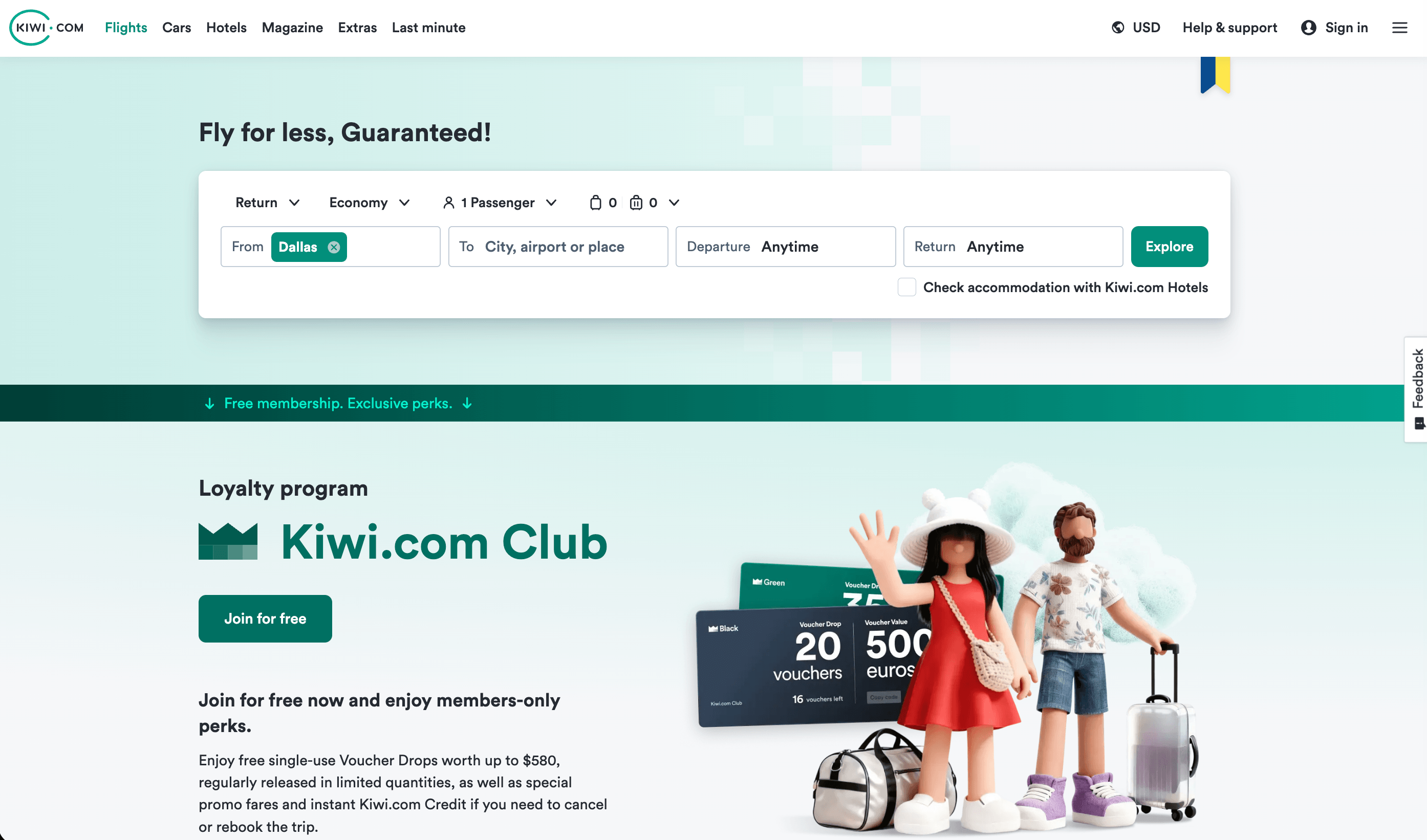
Use it for complex routes, multi-city trips and group travel.
Kiwi.com works differently from the other two. Instead of searching existing airline partnerships, it uses virtual interlining technology to combine flights from airlines that don't normally cooperate, building routes that wouldn't appear anywhere else. For straightforward direct business flights, Google Flights or Skyscanner will serve you better. For complex routing where the price difference is significant, Kiwi earns its place.
I used Kiwi to organize a workation for a team of 12 people flying from Lithuania to Portugal, with part of the group routing back through Warsaw. The ability to search multi-city itineraries and see full routing costs across different departure points made it far more practical than running separate searches for each person on each leg. For small businesses coordinating group travel, that kind of consolidated view saves significant planning time.
One important caveat for business travel specifically: because Kiwi combines separate tickets from different airlines, you are responsible for your own connection if a flight is delayed or cancelled. For business travelers where reliability and predictability matter more than saving 30 euros, this is worth factoring in. Use Kiwi to find and compare options, then assess whether the price difference justifies the self-transfer risk for each specific trip.
Best for: multi-city trips, group business travel and workation coordination, finding routes that don't exist on standard platforms.
Free to search. Booking fees may apply.
How to Use These Three Tools Together for Small Business Travel
Step 1: Open Google Flights, search your route, check the price calendar for date flexibility, and note the benchmark price. Set a fare alert if the trip is more than 3 weeks away.
Step 2: Run the same search on Skyscanner. If the price is lower, check what's included before assuming it's cheaper. Budget carrier fares on Skyscanner sometimes exclude baggage that would cost extra.
Step 3: Only go to Kiwi if the route is complex, involves multiple cities, or you're coordinating group travel. Compare total cost including any self-transfer risk before committing.
For most solo business trips, steps 1 and 2 will find you the best price in under ten minutes. Step 3 is the specialist you bring in when the standard approach isn't producing what you need.
3 Small Business Travel Tips That Save Real Money
Book within a policy window, not reactively. Flights booked 4 to 8 weeks out are consistently cheaper than last-minute bookings. Building a simple travel booking window into your business practice is the single highest-leverage thing a small business can do to reduce travel costs without changing anything else.
Always check baggage fees before assuming a cheap fare is cheap. Budget carriers on Skyscanner and Kiwi sometimes show headline fares that don't include carry-on luggage. For business travelers who never check bags, this is fine. For anyone who does, the true cost of a "cheap" fare can exceed a more expensive direct booking once fees are added.
Use price alerts as a passive booking strategy. Setting Google Flights alerts for planned trips 2 to 3 months out and booking when the price drops takes 5 minutes and consistently beats manually monitoring prices. For small businesses with predictable travel patterns, this approach removes urgency from the booking process entirely.
Frequently Asked Questions About Flight Search for Small Business Travel
More from
Small Business
category